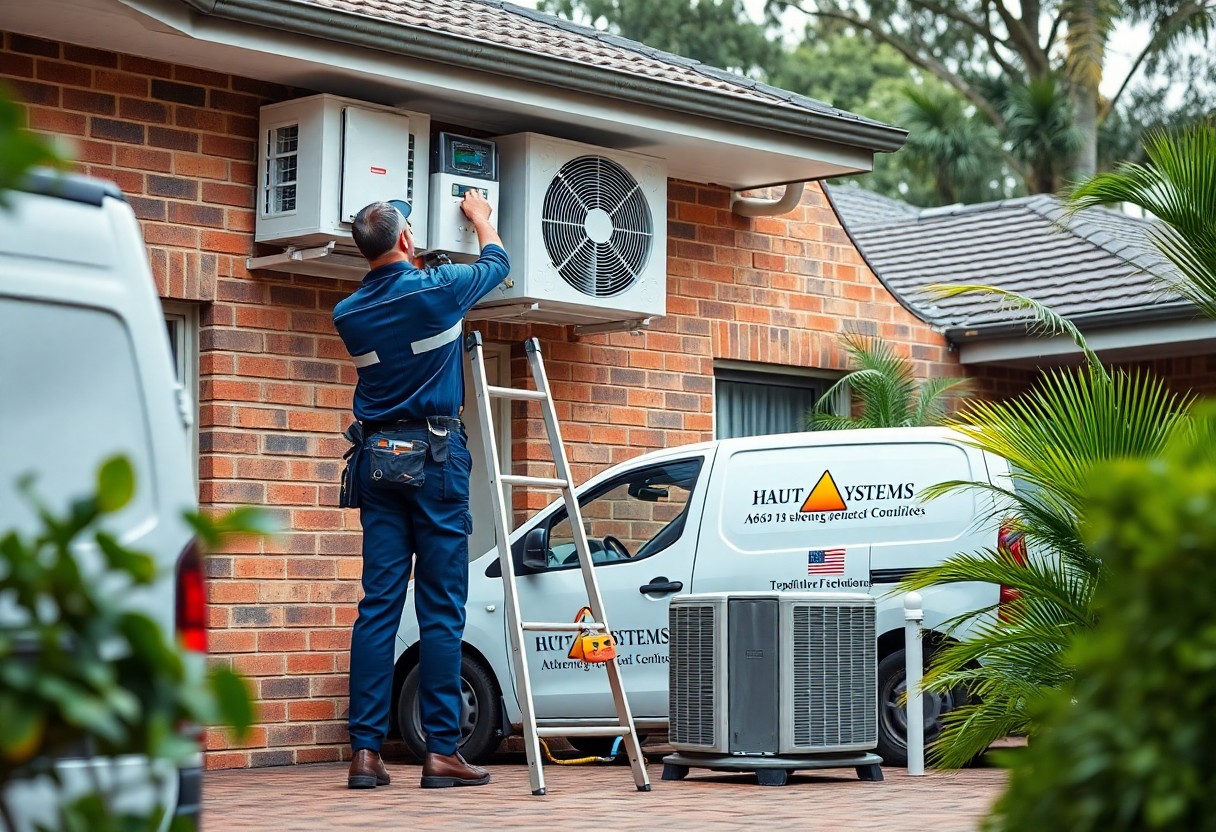
What Should Carindale Homeowners Look For In Quality Brisbane Air Conditioning Services?
Just prioritize Brisbane air conditioning services that are licensed, insured and experienced with Carindale properties; you should expect transparent written quotes, energy-efficient system recommendations, correct sizing and professional installation, strong manufacturer and workmanship warranties, prompt emergency support and regular maintenance plans. Check references and online reviews, verify compliance with local regulations, and choose technicians who explain costs and performance clearly so your investment delivers reliable comfort and lower running costs.
Key Takeaways:
- Licensed, insured technicians – verify ARCtick or refrigeration-handling and electrical licences plus public liability insurance.
- Local experience and reputation – proven track record in Brisbane/Carindale, local references and positive reviews.
- Correct sizing and energy efficiency – professional load calculations, inverter technology and high energy-star ratings to lower running costs.
- Comprehensive maintenance and warranty – regular service plans, prompt repairs and clear manufacturer/installer warranties.
- Transparent quotes and regulatory compliance – detailed written estimates with itemised costs (installation, removal, permits) and adherence to Queensland refrigerant/safety regulations.
Assessing Qualifications of Air Conditioning Technicians
When vetting technicians you should focus on verifiable qualifications, proper insurance and documented experience with the exact system you own; check licence numbers against the Queensland regulator (QBCC) and confirm public liability and consumer insurance limits. Ask for recent job sheets showing model numbers and outcomes, inspect their toolset and vehicle signage, and weigh online reviews-aim for providers with multiple 4+ star reviews and demonstrable local Carindale work history.
Certifications and Licenses
You should require a Certificate III in Air-conditioning and Refrigeration plus a current refrigerant-handling licence and, if electrical work is involved, an electrical licence. Request copies, note licence numbers and verify them online with the issuing body. Also prefer technicians who hold manufacturer training for your unit (e.g., Daikin, Mitsubishi Electric) and membership of industry bodies, which indicates up-to-date training and compliance with standards.
Experience Level
For split-system repairs 1-2 years can suffice, but for ducted, inverter multi-split or commercial systems you should seek technicians with 3-5+ years; those with 5-10 years handle complex fault diagnosis and larger installs more reliably. Check portfolios showing similar jobs, ask for at least two recent local references, and confirm they’ve completed commissioning, refrigerant charging and airflow balancing on the models you own.
Dig deeper by asking how they measure performance: you want technicians who use manifold gauges, digital thermometers, anemometers and leak detectors, and who provide superheat/subcooling and airflow readings on completion. Prefer tradespeople who supply before/after energy or temperature data, offer clear workmanship warranties, and can demonstrate successful warranty claim handling with manufacturers-this separates routine installers from technicians who can optimise system lifespan and efficiency.
Types of Air Conditioning Systems
You’ll encounter several system types that suit different house layouts and budgets: whole-home ducted units, split systems for individual rooms, ductless mini-splits for zoned control, evaporative coolers for dry climates, and portable/window units for temporary needs. In Brisbane, typical residential capacities run 2.5-7 kW per room; seasonal energy efficiency ratios (SEER or star ratings) vary from 3.0 to 6.5. Choose based on insulation, roof space, and how many zones you want to run independently.
- Central (ducted) systems deliver even whole-house temperature control and often use 3-6 kW per zone in medium homes.
- Split systems give higher efficiency for single rooms and usually cost less to install than full ducting.
- Ductless mini-splits allow multi-zone control with up to eight indoor heads on a single outdoor unit.
- Evaporative cooling can cut running costs by 40-60% in low-humidity months.
- This option-portable or window units-suits renters or short-term solutions with minimal upfront cost.
| Central (Ducted) | Whole-home coverage; installs $4,000-$10,000 AUD; best for 3+ bedrooms and consistent comfort. |
| Split (Wall-mounted) | Cost-effective for single rooms; 2.5-7 kW models common; SEER 4-6 typical for modern units. |
| Ductless Mini-Split | Multi-zone up to 8 heads; inverter tech improves efficiency by ~20-30%; flexible installation. |
| Evaporative Cooler | Low running costs in dry weather; not ideal for humid Brisbane summers; simple rooftop installs. |
| Portable/Window | Cheap upfront (~$300-$1,200 AUD); useful for temporary cooling or small rooms only. |
Central vs. Split Systems
You’ll prefer central ducted systems when you want uniform comfort across a whole house and have roof space for ductwork; expect typical installs of $4,000-$10,000 AUD for a 3-4 bedroom home. Conversely, split systems suit targeted cooling-single-room units run ~2.5-7 kW and cost far less to install, often $800-$3,000 AUD per zone, letting you run only rooms you use and save on energy.
Ductless Mini-Splits
Ductless mini-splits give you precise zone control with inverter compressors and efficiencies up to 30% better than older window units; a single outdoor unit can support 2-8 indoor heads, making them ideal if you lack ductwork or want to cool extensions and granny flats without major renovations.
You can install mini-splits with small 65-90 mm refrigerant lines and simple wall penetrations, reducing disruption; in practice, an average 3-bedroom renovation might use a 9 kW outdoor unit paired with three 3 kW indoor heads, cutting running costs versus portable units. Maintenance is straightforward-clean filters every 3 months and schedule professional servicing every 12 months to maintain warranty and optimal COP (coefficient of performance).
Energy Efficiency Standards
When comparing quotes you should check SEER/EER, inverter technology and Australian star labels: modern high‑efficiency split systems often rate 16-26 SEER or 4-6+ stars. In Brisbane, choosing a 16 SEER inverter over an older 10 SEER unit can cut seasonal cooling energy by roughly one‑third, lowering annual bills and reducing compressor run time for longer equipment life.
SEER Ratings
SEER measures seasonal cooling efficiency and you should aim for at least 14-16 SEER for meaningful savings in Carindale’s warm months. Variable‑speed inverter models commonly reach 18-26 SEER and perform better at part‑load conditions; switching from a 10 SEER fixed‑speed to a 16 SEER inverter typically reduces real‑world energy use by about 30-40%, according to local installer data.
Energy Star Certification
If you consider imported units, ENERGY STAR certification indicates performance above baseline standards and can translate to roughly 10-30% lower energy use than non‑certified models. You should look for the ENERGY STAR Most Efficient label or the equivalent Australian star rating, verify the certified SEER/EER numbers, and request local performance estimates from your installer.
ENERGY STAR thresholds differ by equipment class, so you need to compare exact model numbers rather than assuming all certified units perform the same. For example, ENERGY STAR mini‑splits often pair SEER 18+ ratings with inverter compressors; ask manufacturers for seasonal performance tables and have your technician model expected annual kWh for your Carindale home to estimate actual savings.

Customer Reviews and Testimonials
Importance of Reputation
You should weigh an installer’s reputation-consistent 4.5+ star ratings and at least 50 reviews often indicate reliable service. Check how they handle warranty claims, on-time arrivals, and post-service follow-up; reports of warranty refusal or repeated no-shows are red flags. For example, Carindale homeowners who chose firms with average response times under 24 hours reported fewer emergency call-outs and faster system restores.
Where to Find Reviews
Google Reviews, Facebook, ProductReview.com.au, Hipages and Oneflare all host local feedback; state complaint records on the Queensland Office of Fair Trading reveal formal disputes. You can also scan Carindale community groups and Nextdoor for unfiltered neighbour experiences. Prioritise providers with a 4.5+ average rating and 50+ reviews, plus recent comments within the last 12 months to confirm current performance.
When you evaluate reviews, check for photos, job details (system type, number of rooms) and technician names-fake entries often lack dates or specifics. Also verify credentials like licensed RAC technicians and a refrigerant handling licence, and note measured outcomes (energy savings, temperature improvements). If a company replies to complaints within 48 hours and supplies before-and-after photos, that signals professional customer care.
Service and Maintenance Plans
You’ll want a plan that combines scheduled inspections, priority callouts and clear record-keeping: many Brisbane providers offer annual or biannual servicing, discounted routine visits, and plan members often get waived call-out fees and faster response times during heatwaves, keeping warranties intact and tracking refrigerant levels, coil condition and electrical safety so small issues are fixed before they escalate.
Routine Maintenance Benefits
Regular upkeep-filter changes every 3 months, annual coil and condensate checks, and electrical testing-keeps your system running efficiently; you can expect roughly 10-15% better energy performance, fewer unplanned breakdowns, and an extended service life of around 3-5 years when technicians address refrigerant balance, fan motors and thermostat calibration on a set schedule.
Emergency Repair Services
You should choose a provider offering 24/7 emergency response with on-site diagnostics and temporary safety fixes; common urgent faults are refrigerant leaks, compressor seizure or electrical failures, and having a contract often gives you priority dispatch and reduced call-out fees so your home’s cooling is restored fast when temperatures spike.
In practice, response times vary from 2-24 hours depending on provider and time of day; typical emergency repairs like capacitor or fan motor replacements usually run $150-$600, while major items such as compressor replacements can be $1,000-$3,000-so your maintenance plan’s parts discounts, on-vehicle stock and priority scheduling can save you both downtime and significant expense.
Cost Estimates and Transparency
You should expect written, itemised quotes that break down unit cost, labour hours, materials, and any permit or disposal fees; reputable Brisbane services typically provide a fixed-price installation quote within 48 hours after an on-site assessment and will state GST and warranty lengths (commonly 5-10 years for parts) so you can compare bids on an apples-to-apples basis.
Understanding Pricing Structures
Ask whether pricing is hourly, flat-rate, or milestone-based: technicians often charge $80-$150 for a diagnostic call-out, while full split-system installs usually quote labour plus parts-e.g., $1,500-$3,000 total-with labour listed separately (2-6 hours typical). You should demand an itemised quote showing hourly rates, parts mark-up, and any allowances for additional electrical work or duct modifications.
Avoiding Hidden Fees
You should probe for common add-ons like after-hours surcharges (often 15-25%), travel or remote-location fees, and charges for removing old equipment; insist the quote explicitly lists exclusions such as asbestos removal, council inspection costs, or electrical panel upgrades so you won’t face surprise invoices after work begins.
Before you sign, request a clause that caps variations and requires your written approval for any extra work; check sample final invoices from the provider, confirm whether warranty activation needs immediate payment, and verify who arranges and pays for council permits (fees in Brisbane can range from about $100 to $400) to minimise post-installation costs.
Conclusion
Summing up, you should choose Brisbane air conditioning services that employ licensed, insured technicians with local Carindale experience, offer transparent quotes and pricing, provide energy-efficient system options, reliable warranties and maintenance plans, fast emergency response, and positive local reviews – this ensures your comfort, compliance with regulations, and long-term efficiency.
FAQ
Q: What credentials and insurance should Carindale homeowners require from Brisbane air conditioning services?
A: Require technicians to hold appropriate Queensland refrigeration and electrical licences, public liability and workers’ compensation insurance, and evidence of ongoing industry training. Prefer companies with manufacturer authorisations or factory accreditation for the brands they install, and ask for verifiable references or recent local job photos.
Q: How can homeowners ensure the system is correctly sized and energy-efficient for a Carindale house?
A: Ask for a formal room-by-room heat-load assessment rather than a rule-of-thumb recommendation. The quote should account for house orientation, insulation, glazing, ceiling height, occupancy and local Brisbane climate. Compare energy ratings and inverter technology, choose a right-sized unit to avoid short-cycling, and discuss zoning, ductwork condition or insulation upgrades to maximize efficiency.
Q: What servicing and maintenance practices indicate a high-quality provider?
A: A reputable provider will offer scheduled maintenance plans with documented checklists: filter replacement/cleaning, coil cleaning, condensate drain clearing, refrigerant pressure checks and leak testing, electrical connection tightening, airflow and thermostat calibration, and performance reporting. They should use correct refrigerant handling procedures, provide written service records, and recommend preventative repairs before failures occur.
Q: Why do warranties, parts availability and after-sales support matter when choosing a service?
A: Confirm separate manufacturer and installer warranties, including length and whether parts and labour are covered. Ask if warranties are transferable if you sell the property. Good suppliers keep common spare parts locally and provide clear response time targets for breakdowns, emergency callouts, and ongoing maintenance contracts to protect system uptime and long-term value.
Q: How should Carindale homeowners compare quotes and check a provider’s reputation?
A: Require itemised written quotes showing scope, brand/model, energy ratings, installation details, inclusions (e.g., duct sealing, old-unit removal), timelines and permit responsibilities. Obtain multiple quotes, verify online reviews and direct references, inspect examples of finished work, and beware of significantly low bids that omit necessary work or compliant components. Ask for projected operating costs to compare long-term value, not just upfront price.
