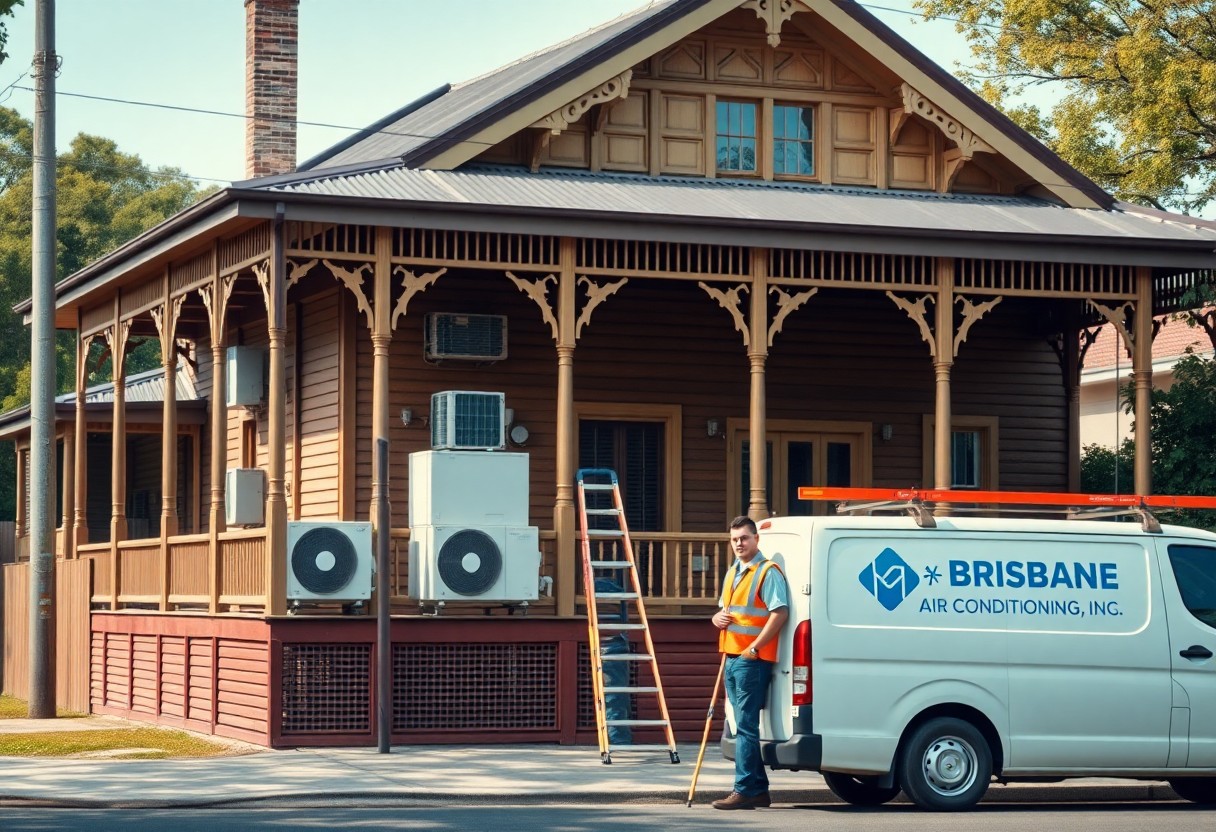
Which Brisbane Air Conditioning Services Best Suit Paddington’s Classic Queenslanders?
Just because your Queenslander blends heritage and airy verandahs, you need air conditioning that preserves timber, enhances cross-ventilation and minimises visual impact; evaluate split systems, multi-zone ducted options and high-efficiency reverse-cycle units, and prioritise installers experienced with elevated homes and humidity control to protect your house and maintain year-round comfort.
Key Takeaways:
- Prioritise reversible split systems or multi-split setups for room-by-room control; concealed slimline ducted systems work for whole-house comfort with minimal impact on timber fabric.
- Size and airflow are vital for high-ceiling, elevated Queenslanders-select units with higher capacity and ducting or high-level outlets to overcome stack effect.
- Address humidity and thermal performance with dehumidification, improved roof insulation and underfloor ventilation; ceiling fans reduce load and preserve heritage aesthetics.
- Position outdoor condensers discreetly on anti-vibration mounts, consider noise ratings and heritage screening to satisfy council and neighbour concerns.
- Use Brisbane contractors experienced with Paddington’s Queenslanders for correct sizing, council approvals, termite-safe installation and ongoing servicing of energy-efficient inverter systems.
Understanding Paddington’s Classic Queenslanders
Characteristics of Queenslander Homes
Raised timber floors, wide verandahs and corrugated iron roofs characterize Paddington’s Queenslanders; you’ll often encounter 3-3.6 m ceilings, stumps 1-2 m high and single-skin or chamferboard walls from homes built c.1890-1940. These design elements enhance cross-ventilation but complicate duct runs, outdoor unit siting and pipework concealment, and many properties sit inside heritage overlays that limit external modifications.
Unique Climate Considerations
Brisbane’s subtropical climate delivers summer highs around 29-30 °C, average annual rainfall roughly 1,100-1,200 mm and summer humidity frequently 60-80%, so you face mould, timber rot and condensation issues if ventilation and moisture control are inadequate. Prioritising dehumidification, airflow and corrosion-resistant components should guide your system choice.
In practice, you’ll typically size bedroom units at 2.5-3.5 kW and living zones at 5-7 kW; inverter split systems with variable-speed compressors and 3-5 star ratings balance comfort and running cost. Heritage constraints may force internal condensers or concealed ducting, so you should plan condensate routing, insulated refrigerant lines and mounting points to avoid timber damage and ensure compliance with local council requirements.
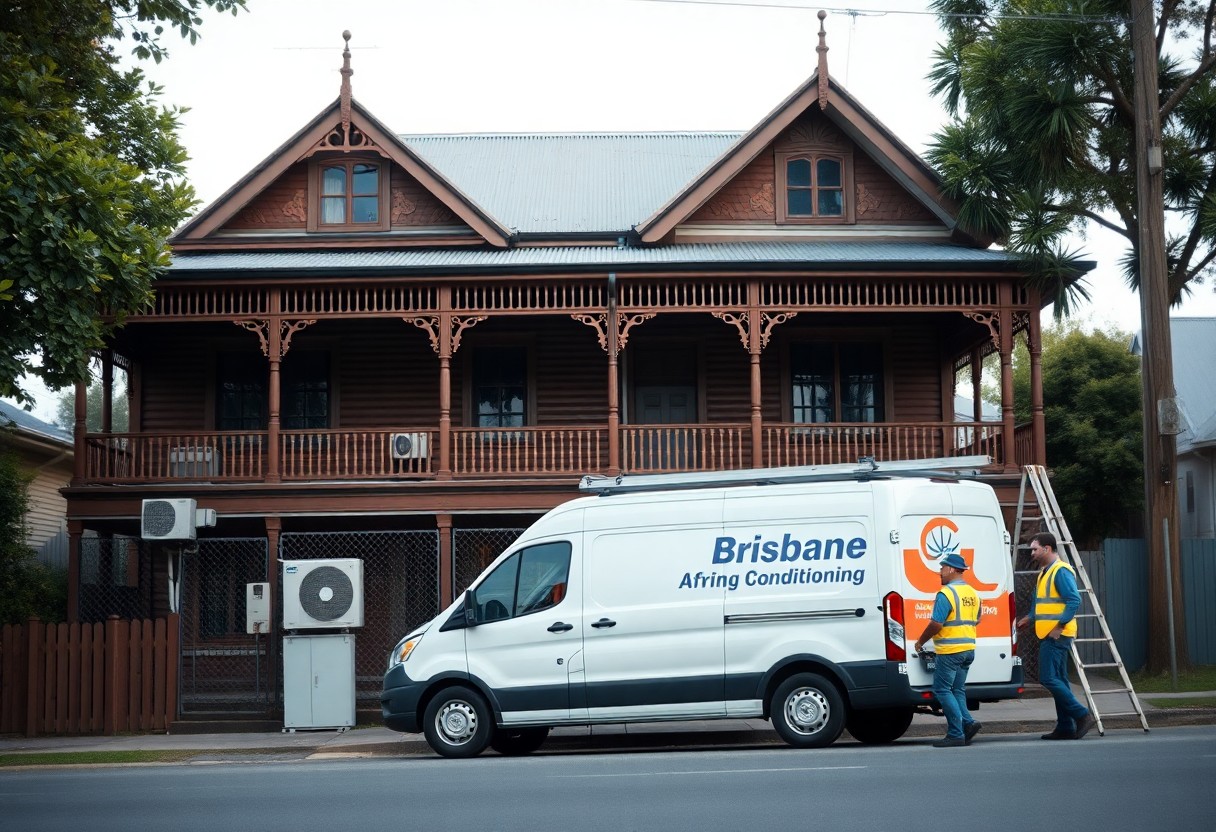
Importance of Air Conditioning in Queenslanders
Queenslanders’ timber frames, high ceilings and raised subfloors concentrate heat and moisture in ways modern homes don’t; with Brisbane summer highs averaging 29-30°C and humidity often 60-80%, you need systems that control temperature and moisture to protect timber, limit mould and preserve finishes. Heritage facades and narrow wall cavities frequently rule out full ducted installs, so targeted solutions-split systems, high-wall units, underfloor ventilation and ceiling fans-are the practical balance between comfort and conservation.
Enhancing Comfort and Air Quality
You improve comfort and indoor air quality by pairing properly sized reverse‑cycle units with filtration and humidity control; aim to keep relative humidity around 40-60% to restrict mould and dust‑mite growth. Modern units with washable pre‑filters plus HEPA or electrostatic media capture particles down to 0.3 μm, and when you combine that with controlled cross‑ventilation or a 20-30 L/day dehumidifier in damp months, occupants report fewer allergies and noticeably fresher indoor air.
Energy Efficiency and Sustainability
You cut running costs and emissions by choosing inverter split systems and sensible zoning; inverter models commonly use about 30-50% less electricity than older fixed‑speed units, and zoning living and sleeping areas can reduce overall cooling energy by 20-40%. Opt for units with high star ratings and proper commissioning to capture those savings in real use.
When sizing and specifying for Queenslanders, you must balance capacity and run‑time: oversizing short‑cycles and wastes energy, while undersizing forces long run times that fail to dehumidify. Use ceiling fans to allow higher thermostat setpoints-each 1°C increase frequently reduces cooling energy use noticeably-and install reflective roof coatings or external blinds to cut solar heat gain by up to around 20-30%. Pairing a high‑efficiency inverter unit with a typical 6-6.6 kW rooftop solar array in Paddington often offsets daytime cooling loads, while regular filter cleaning and annual service (including refrigerant checks and coil cleaning) commonly restores 10-15% of lost efficiency, according to local HVAC installers.
Types of Air Conditioning Systems
| System Type | Split (single & multi), ducted, evaporative, and portable – choose by room count and heritage limits |
| Capacity & Coverage | Split: 2.5-7 kW/head (single room each); Ducted: 9-20 kW whole-house; Evaporative: whole-house in low-humidity conditions |
| Approx. Installed Cost (AUD) | Split: $900-$3,000/head; Ducted: $6,000-$15,000; Evaporative: $3,000-$6,500 depending on home size |
| Installation Impact | Split needs small wall penetrations; Ducted needs ceiling cavity or bulkheads which may affect verandahs and cornices |
| Noise & Efficiency | Split: quiet indoor units; Ducted: centralised noise with better whole-house balance; Evaporative: low running cost but limited in humidity |
- Split systems – targeted cooling for individual rooms
- Multi-split – up to 8 indoor heads on one outdoor unit
- Ducted systems – whole-house comfort with zoning
- Evaporative – cheaper to run in dry months
- Portable – short-term, low-cost option
Split Systems
You can deploy single or multi-split heads (2.5-7 kW) to condition specific rooms; a 4 kW head typically cools ~20-25 m², and installing 2-3 heads often covers a small Queenslander living area and bedrooms. Units run quieter indoors and cost roughly $900-$3,000 installed per head, making phased upgrades practical when heritage controls limit external changes.
Ducted Systems
You get whole-house zoning with ducted systems (commonly 9-20 kW) that hide in ceiling cavities and deliver consistent temperatures; modern inverter units offer 2-6 zoning capability, improving comfort and reducing wasted energy, while installed prices usually sit between $6,000 and $15,000 depending on house footprint.
In Paddington’s classic Queenslanders you’ll often use the roof cavity or discrete bulkheads to run ducts; a 12 kW inverter ducted system commonly services a 120-180 m² timber home and, when paired with 3-4 zones, can cut running costs by around 20-30% compared with undivided systems. You should plan for annual filter servicing, occasional duct checks, and liaise with council on visible external works-examples from local installs show minimal visual impact when installers use existing roof voids and compact external compressors.
The choice often comes down to balancing heritage constraints, budget, and how many rooms you want to condition.
Recommended Air Conditioning Services for Paddington
Prioritise services that size systems to Queenslander layouts: 3.5-5.2 kW split systems for bedrooms, 6-8 kW for open-plan living, or a slimline 12-16 kW ducted unit for whole-house comfort; choose inverter models with 4-6 star ratings, require on-site thermal assessment, and insist on heritage-permit experience plus a written compliance and maintenance plan before work begins.
Local Providers with Expertise
You should favour Paddington installers who are ARC-accredited and have documented Queenslander experience-many local specialists complete 300-600 heritage retrofits across inner-Brisbane, partner with brands like Daikin and Mitsubishi Electric, handle Council permits, supply client references, and include site photos and a written quote with every job.
Installation and Maintenance Options
You can opt for split-system retrofits to avoid ceiling works, ducted reverse-cycle for whole-house zoning, or evaporative cooling where humidity permits; standard maintenance plans include quarterly filter cleaning and annual service, with typical costs around $1,200-$3,500 for splits and $7,000-$12,000 for ducted installs depending on access and insulation needs.
For more detail, consider zoning: installing 2-4 zones on a 12-16 kW ducted system often lowers running costs by letting you cool occupied rooms only; ensure condensate drainage and underfloor clearances are checked, request coil and refrigerant leak tests annually, and confirm manufacturer compressor warranties (commonly 5-10 years) are activated with on-time servicing.
Customizing Air Conditioning Solutions
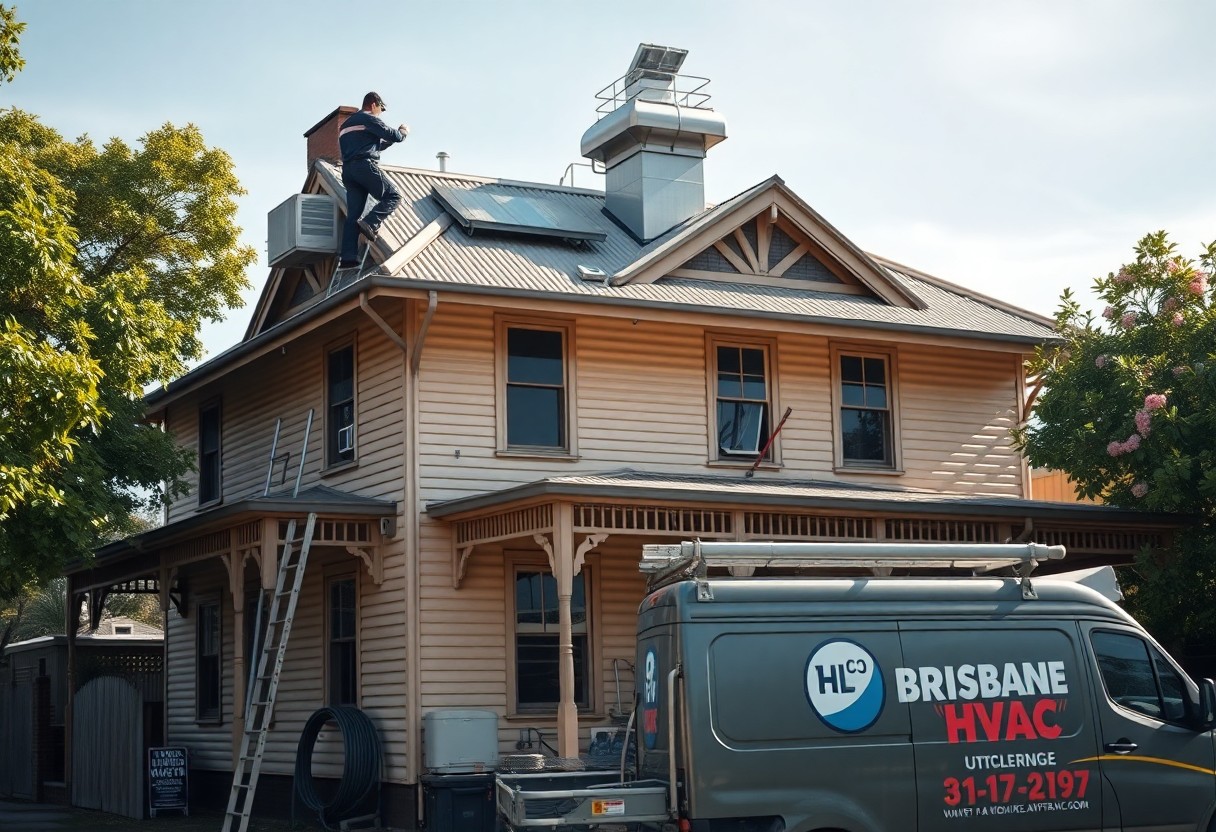
A site-specific approach measures floor area, ceiling height, orientation and timber floor voids to size systems correctly; for example, a 3‑bed Queenslander of 120-150 m² typically uses a 9-12 kW ducted inverter or 2-3 splits (3.5-7 kW each) to balance cooling and humidity control. You’ll also factor in heritage overlays in Paddington that limit external work, so concealment, low‑profile condensers and reversible-cycle choices often win approval while preserving aesthetics and performance.
Tailored Installations for Classic Designs
You can choose high‑wall splits, multi‑split layouts or slimline concealed ducted units to match timber ceilings and verandahs; installers commonly mount condensers on rear balconies or use custom brackets to keep units off the ground and reduce vibration. Specify acoustic isolation pads to target <45 dB at the boundary, insulated flex ducts under floor voids for efficiency, and a dedicated electrical circuit and RCD per AS/NZS 3000 to ensure safety and compliance.
Smart Technology Integration
Integrating Wi‑Fi thermostats, zoning and geofenced scheduling lets you cut running costs and boost comfort: pairing occupancy sensors and app routines can reduce energy use by roughly 10-20% compared with manual control. You’ll link systems to manufacturer apps (Daikin, Mitsubishi, Fujitsu), voice assistants (Alexa/Google) or home hubs so rooms heat or cool only when occupied and you can pre‑cool rooms 10-15 minutes before arrival.
For larger ducted installs you can add motorised zoning dampers, humidity sensors and BMS gateways (Modbus/BACnet) so your home automation manages demand and thermal load; installers will commission setpoints, hysteresis and setback schedules (often 3-4°C overnight) to prevent short cycling. You’ll get better results when a technician configures geofencing, runtime limits and weekly schedules and provides energy‑use reports for ongoing optimisation.
Cost Considerations and Budgeting
Comparing Costs of Different Systems
You’ll often weigh upfront installation against ongoing bills: single-room split systems typically cost less to buy and install, while ducted reverse-cycle or multi-zone setups require higher initial outlay but can better cool whole Queenslanders with one system. Expect variability from room count, ceiling heights, and access for ductwork; for example, installing ducted air conditioning in an elevated Paddington cottage can double labour costs compared with a ground-floor unit.
Comparative Costs
| System | Typical installed cost (AUD) & notes |
|---|---|
| Split system (1-2 rooms) | $1,200-$4,000; low installation, suits individual rooms; running ~$250-$600/yr |
| Multi-split / ducted zoned | $6,000-$12,000; higher install for ceiling voids and zoning; better whole-house control |
| Evaporative cooling | $1,000-$3,500; cheaper install and running in dry conditions, less effective in humid Brisbane weather |
| Replacement/upgrades | Refurbishing ceilings or adding bulkheads: $500-$3,000 extra; expect higher quotes for heritage-sensitive work |
Long-Term Savings through Energy Efficiency
You’ll recoup higher upfront costs on efficient systems through lower running bills: inverter-driven units and high star ratings can cut energy use by around 20-35% compared with older fixed-speed models. With typical Brisbane electricity around $0.25-$0.35/kWh, upgrading a 3-4kW system can save roughly $200-$450 per year, depending on how often you run cooling and the size of your home.
For deeper context, pairing a 5‑star inverter system with zoning and smart thermostats often delivers the best payback in classic Queenslanders where you don’t need to cool every room constantly. In practice, installing two well-placed splits plus smart controls can beat a single oversized ducted unit on both comfort and lifecycle cost; you might see a 3-7 year payback on efficiency upgrades before maintenance and replacement costs are considered.
Summing up
Summing up, you should opt for energy-efficient reverse-cycle ducted systems for whole-house comfort, supplemented by discrete split-systems for individual rooms; prioritise heritage-sensitive installations, adequate insulation and humidity control to protect timber structures, and engage local Brisbane technicians experienced with Paddington’s Queenslanders for tailored sizing, ventilation and regular maintenance to keep your home comfortable and preserve its character.
FAQ
Q: What types of air conditioning systems best suit Paddington’s classic Queenslanders?
A: Ducted reverse-cycle systems with concealed ducts in roof cavities or underfloor spaces and high-wall ductless mini-split (inverter) units are the most suitable. Ducted systems give whole-house comfort and preserve exterior aesthetics when vents and bulkheads are kept low-profile; mini-splits provide room-by-room control without large external plant. Avoid evaporative cooling because Brisbane’s humidity reduces effectiveness; choose inverter-driven refrigerant systems (modern R32 or equivalent) for energy efficiency and flexible zoning.
Q: How should installations respect Paddington’s heritage and timber construction?
A: Use heritage-sensitive installation techniques: place outdoor condensers in discreet locations with anti-vibration mounts and acoustic screening, route refrigerant and electrical runs through existing cavities where possible, and use matching paint or screening to hide visible components. Engage installers experienced with heritage overlays and council requirements to minimise new penetrations, obtain any necessary approvals, and ensure fixings and flashings prevent moisture ingress into timber and joinery.
Q: How can humidity and ventilation be managed inside high-ceiling Queenslanders?
A: Combine correctly sized air conditioning with mechanical ventilation and ceiling fans to maintain air movement and moisture control. Ensure systems include dehumidification-capable modes or variable-speed compressors, provide cross-ventilation strategies (vented roof space/soffits where appropriate), and seal and insulate roof cavities to reduce condensation. Where condensation risk exists, specify insulated ductwork, condensate pumps or traps, and regular condensate drain maintenance.
Q: What specialist services should I request from a Brisbane AC contractor for these homes?
A: Ask for a full load calculation (Australian Manual J/S equivalents), heritage-sensitive installation experience, duct design and leakage testing, condensate management planning, corrosion-resistant outdoor equipment for the coastal climate, and electrical service or switchboard upgrade if required. Request certification of compliance, gas/refrigerant handling licencing, warranty registration, and written proposals showing equipment placement to minimise visual impact on the streetscape.
Q: How should systems be sized and zoned for rooms with verandahs, high ceilings and timber floors?
A: Size systems using room-by-room heat-load calculations that account for high ceilings, elevated floors, timber thermal performance and large shaded verandahs; don’t rely on rule-of-thumb sizing. Use multiple zones or multi-split heads to avoid overcooling verandah-facing rooms, place sensors at representative heights (not directly under high ceilings), and consider variable refrigerant flow or multi-zone ducted setups to balance capacity, efficiency and comfort across living areas and bedrooms.
