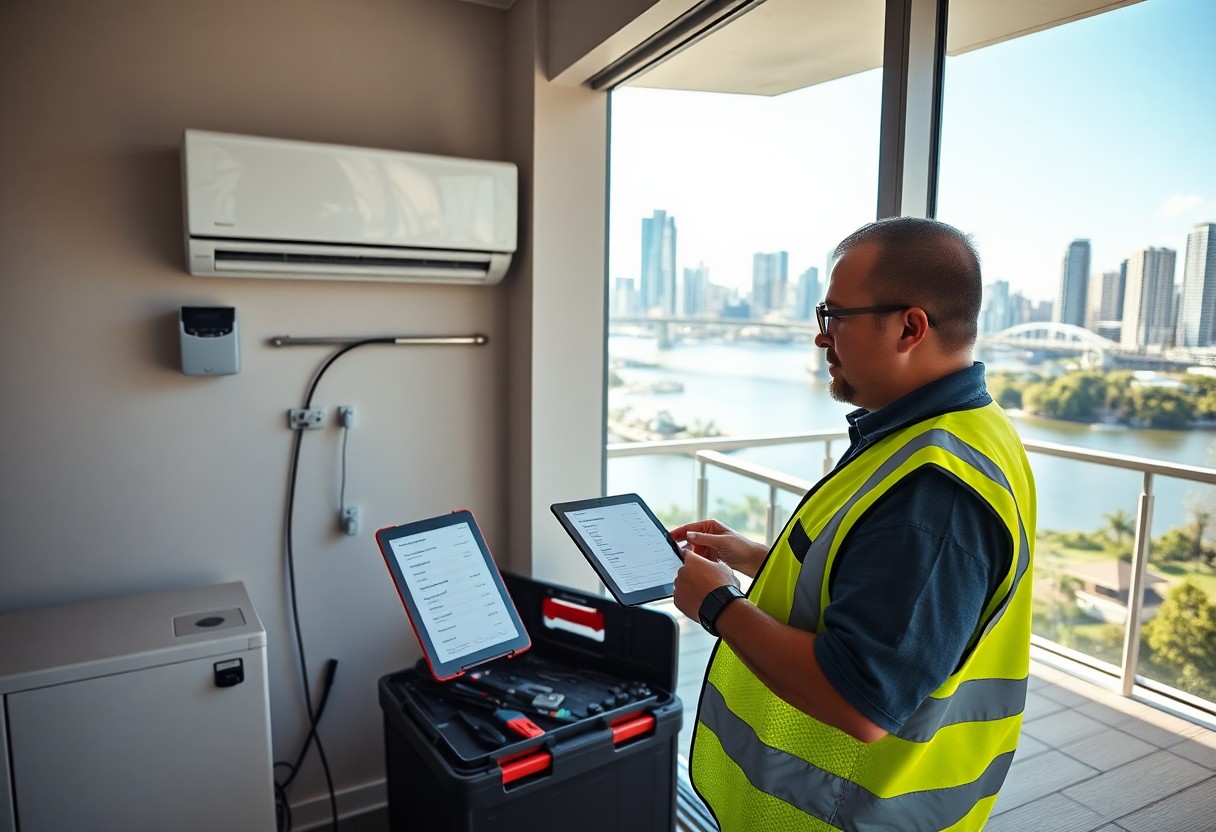
What Makes Brisbane Air Conditioning Services Essential For South Brisbane Apartments?
Brisbane is known for hot, humid summers, so reliable air conditioning is vital for comfortable, healthy living in South Brisbane apartments. You need timely servicing to maintain efficiency, reduce energy bills, and preserve indoor air quality; professional technicians ensure correct sizing, compliant installation, and rapid repairs to protect your comfort, health, and property value.
Key Takeaways:
- Regular servicing prevents breakdowns and reduces costly emergency repairs during Brisbane’s hot, humid months.
- Professional maintenance improves energy efficiency, lowering bills in apartment units with limited space and shared systems.
- Proper servicing enhances indoor air quality by reducing dust, mould, and allergens common in humid climates.
- Tailored solutions for South Brisbane apartments-compact split systems, ductwork cleaning, and strategic condenser placement-maximize comfort and meet building requirements.
- Timely repairs and planned replacements extend equipment lifespan and protect apartments from moisture-related damage.
Importance of Air Conditioning in South Brisbane
With summer highs often exceeding 30°C and humidity regularly above 60-70%, your apartment can become uncomfortable and energy-inefficient without proper cooling. You face trapped heat in high-rise glazing and limited cross-ventilation, so effective air conditioning preserves indoor air quality, reduces condensation-related damage, and cuts peak electricity use when properly sized and maintained.
Climate Conditions
South Brisbane’s humid subtropical climate delivers hot, muggy summers, frequent afternoon storms, and nights that often stay above 20°C; you experience urban heat-island effects that can raise local temperatures by 1-3°C. Given these conditions, passive cooling rarely suffices, and professionally installed systems tailored to orientation, glazing and apartment layout perform best.
Health and Comfort Benefits
Proper air conditioning keeps your indoor temperature in the comfort range (about 22-25°C), reduces humidity to the recommended 40-60%, and lowers risks of heat exhaustion, disrupted sleep and mould growth. You’ll notice improved productivity and fewer allergy triggers when humidity and filtration are managed by a correctly serviced system.
Filtration in quality systems can remove particulate pollution-HEPA filters capture ~99.97% of particles ≥0.3 µm-while humidity control limits dust mites and mould (which proliferate above ~60% relative humidity). You can also reduce heat-related illness during heat events by maintaining cool, stable environments and scheduling regular servicing to ensure efficiency and proper airflow.
Types of Air Conditioning Systems
You’ll commonly encounter central, ducted, split, VRF (variable refrigerant flow) and portable systems; compare capacity, installation complexity, noise and running cost. A 10 kW central unit typically serves 100-150 m2, while a 3.5 kW split suits 20-30 m2; inverter technology can cut consumption by about 25-30%. In many South Brisbane apartments you’ll favor compact splits or zoned ducted systems to avoid major renovations. Knowing how each type maps to space and budget guides your choice.
- Central – whole-apartment conditioning
- Ducted – concealed zoning via ducts
- Split – single-room, wall-mounted units
- VRF – scalable multi-zone systems
- Portable – temporary or low-cost option
| Central | 10-25 kW, serves 80-200 m2, higher install cost, suited to new builds |
| Ducted | Zoned control, concealed ducts, ideal for full-flat comfort, moderate to high install cost |
| Split | 2.5-7.1 kW per unit, low install cost per room, easy retrofit for apartments |
| VRF/VRV | Scalable multi-zone, high efficiency for larger flats, higher upfront investment |
| Portable | Low cost, mobile, less efficient, useful for temporary stays or renters |
Central Air Conditioning
Central systems distribute air via ductwork and often use a single outdoor condenser with 10-25 kW capacity to serve entire apartments; installation in multi-unit South Brisbane buildings commonly runs A$6,000-A$15,000 due to duct, ceiling access and compliance work. You should confirm building bylaws and shared-plant arrangements, since plant-room access and noise regulations frequently affect replacement timelines and service windows.
Split System Air Conditioners
Single-split units give you room-level control with common capacities of 2.5-7.1 kW-3.5 kW models typically cool 20-30 m2-and installation often costs A$800-A$2,500 per unit; inverter compressors reduce energy draw and noise, letting you add multiple units for zoned comfort without ducting.
Because you can install reverse-cycle splits on walls or ceilings, you’ll gain both heating and cooling-helpful on cooler Brisbane nights. Maintenance is straightforward: clean filters every 3 months and schedule an annual service to check refrigerant levels and compressor health. In one South Brisbane retrofit, installing two 3.5 kW inverter splits replaced old window units and cut annual energy use by about 27%, while improving noise and temperature control.
Choosing the Right Air Conditioning Service
When deciding on a contractor for your South Brisbane apartment, focus on licensed technicians with a Refrigerant Handling Licence and an electrical licence, clear insurance, and written warranties (commonly 12 months parts and labour). Seek firms offering same-day or 24-48 hour response for urgent breakdowns, documented safety procedures for high-rise work, and transparent, itemised quotes so you can compare labour, parts and energy-efficiency upgrades.
Experience and Expertise
Prioritise companies with 5+ years servicing split, ducted and VRF/VRV systems and proven apartment experience-especially teams familiar with body corporate rules and rooftop plant access. For example, a retrofit on a 200‑unit West End block cut common-area energy use by 18% after switching to inverter-driven compressors; ask for similar case studies and the specific technicians who worked on them.
Customer Reviews and Testimonials
Use review metrics to vet reliability: target providers with average ratings of 4.5+ on Google or 4+ on ProductReview.com.au and at least 30-50 verified reviews, plus prompt public responses to negative feedback. Read comments for punctuality, adherence to quotes, and after-sales support so you can judge whether the company stands behind warranties and completes job-specific requirements like concierge scheduling or noise mitigation.
Dig deeper into testimonials by checking dates, photos, and project scope-prefer reviews that mention apartment size, system model and measurable outcomes (e.g., reduced bills, quieter operation). Also request direct references from recent South Brisbane jobs, confirm written warranties and invoice examples, and verify any claimed energy savings or compliance certificates before you commit.
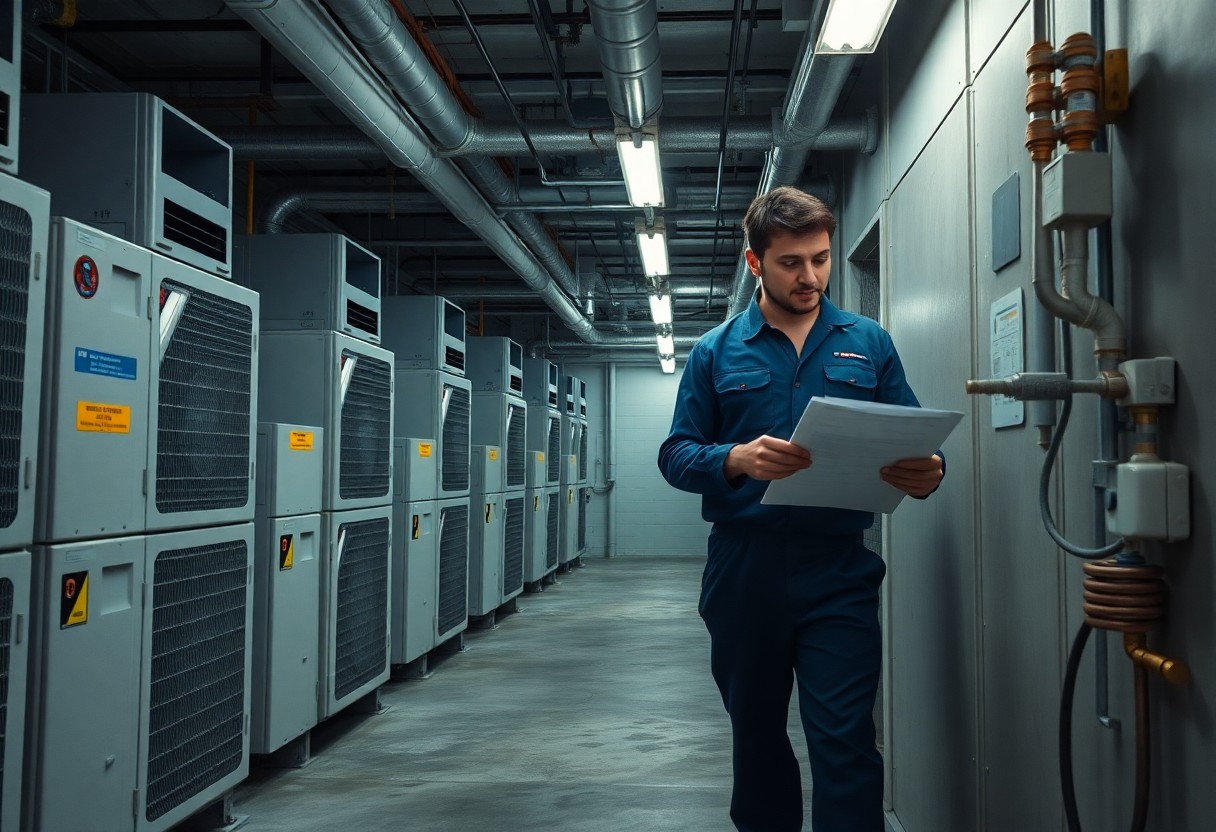
Regular Maintenance and Its Benefits
Routine servicing keeps your apartment’s air conditioning predictable and efficient: scheduled checks every 6-12 months can halve emergency callouts and cut energy use by roughly 10-15% through filter changes, coil cleaning and refrigerant top-ups. You also lower the chance of costly mid-summer failures, maintain indoor air quality for occupants, and ensure compliance with many body corporate maintenance requirements in South Brisbane buildings.
Extending Equipment Lifespan
By carrying out annual inspections, lubrication, refrigerant checks and corrosion protection for coastal exposure, you can add 3-5 years to a unit’s life; well-maintained systems often reach 12-15 years versus 7-10 years when neglected. You should replace worn components early-fans, belts and capacitors-to avoid stress on compressors, which are the most expensive parts to replace.
Energy Efficiency
Keeping filters clean (every 1-3 months in high-use apartments), clearing condensate drains and ensuring coils are free of dust can reduce energy draw by about 5-15% immediately. You should also check refrigerant charge and thermostat calibration during each service, since undercharged systems can raise electricity use by double-digit percentages and reduce cooling capacity.
Beyond basic maintenance, you can pursue upgrades that multiply savings: switching to inverter-driven compressors, installing a programmable or smart thermostat, and balancing ductwork all boost performance. For example, replacing a fixed-speed unit with an inverter model typically delivers 20-40% lower cooling energy in real-world apartment use, and regular quarterly or biannual servicing ensures those gains are realised over the system’s lifetime.
Common Air Conditioning Issues in Apartments
Insufficient Cooling
If your apartment isn’t reaching set temperatures, blocked filters can reduce airflow by up to 30%, refrigerant leaks may cut cooling capacity 20-50%, and an undersized unit will struggle-e.g., a 3.5 kW split typically cools about 20-30 m² while a 5 kW suits 35-45 m². Top-floor or west-facing apartments can add 2-4°C to internal loads, so check filters, airflow and unit capacity against room area before assuming complex faults.
Noise Problems
When your system makes rattling, grinding, hissing or gurgling noises you should note the sound type and timing: rattles often mean loose panels or mounts, grinding points to failing bearings, and hissing/bubbling can indicate refrigerant flow or leaks. Indoor units generally operate around 20-35 dB(A) and outdoor condensers 50-65 dB(A); sustained increases or sudden changes call for inspection to prevent damage or neighbour complaints.
You can use a smartphone sound-level app as a rough diagnostic-readings above ~65 dB(A) at the condenser overnight often signal vibration or wear. Technicians typically fix noisy fans by tightening mounts, replacing rubber isolators or swapping motors (approx. $250-$600), while refrigerant-related noise may require leak detection and compressor work (roughly $800-$2,500 depending on model). Schedule servicing every 6-12 months if you run cooling heavily to catch issues early.
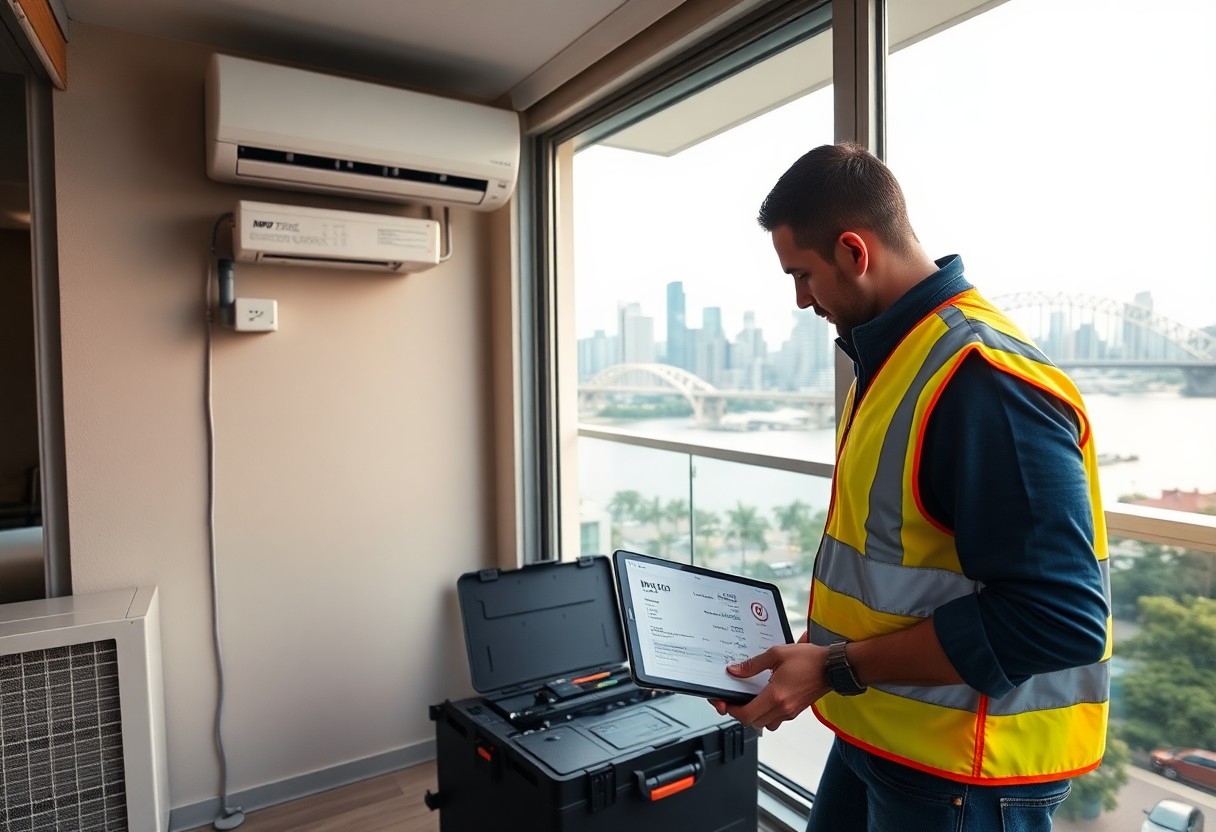
Cost Considerations for Air Conditioning Services
You should plan for four main cost areas: purchase and installation, running expenses, routine servicing, and unexpected repairs. Installation alone can range from A$1,200 for a basic split system to A$12,000 for full ducted setups, while annual running bills in Brisbane typically sit between A$300-A$900 depending on usage and efficiency. Expect a lifecycle of 10-15 years and factor in potential strata approvals or electrical upgrades that raise upfront costs.
Installation Costs
For a single-head reverse-cycle split you can expect A$1,200-A$2,500 installed, multi-head systems commonly hit A$2,500-A$6,000, and ducted installations often range A$6,000-A$12,000. You’ll also pay for site-specific items: condo balcony condenser relocation, permit or strata fees (A$150-A$800), and electrical upgrades (A$200-A$1,200). A two-bedroom apartment typically lands around A$2,500-A$5,000 depending on access and mounting complexity.
Maintenance and Repair Expenses
Budget A$120-A$250 for an annual service visit, with basic filter cleans from A$50-A$150; refrigerant top-ups commonly cost A$200-A$400. Many owners set aside A$300-A$700 per year for routine maintenance and small repairs, or buy service plans for A$150-A$400 annually to lock in inspections and priority callouts. Warranties may cover parts but not labour or pre-existing issues, so check exclusions before work starts.
Plan services every 6-12 months: diagnostic fees usually run A$80-A$150, fan motors A$200-A$600 to replace, and compressor failures often cost A$1,200-A$3,000 to rectify. A common case study: one South Brisbane unit skipped annual checks and faced a A$2,200 compressor replacement within five years, whereas neighbours paying A$300 yearly avoided that expense and extended system life to 12+ years.
Final Words
With this in mind, Brisbane air conditioning services deliver reliable climate control, energy-efficient systems sized for apartment layouts, scheduled maintenance and fast repairs, and compliance with local safety and building codes, so you preserve indoor air quality, reduce running costs, and protect your apartment’s comfort and value.
FAQ
Q: Why are Brisbane air conditioning services necessary for South Brisbane apartments?
A: South Brisbane’s subtropical climate produces hot, humid summers and warm winters that raise indoor temperatures and moisture levels. Professional air conditioning services ensure systems can control temperature and humidity, improving occupant comfort, sleep quality and productivity while preventing mould growth and protecting furnishings and electronics from heat and damp-related damage.
Q: How does professional installation benefit apartment units specifically?
A: Technicians perform accurate load calculations to select the correctly sized system, recommend appropriate split or ducted solutions for limited space, advise on compliant outdoor unit placement (balconies, courtyards, plant rooms) and manage condensate and ventilation requirements. Proper installation reduces noise, improves efficiency, preserves building amenity rules and maintains manufacturer warranties.
Q: What maintenance tasks do Brisbane air conditioning services provide and why are they important?
A: Regular servicing includes filter replacement, coil and drain cleaning, refrigerant leak checks, fan and motor inspection, and control calibration. These tasks restore airflow, prevent blockages and corrosion, reduce microbial growth, maintain indoor air quality, lower breakdown risk and ensure the system runs at rated performance levels.
Q: Can routine servicing and modern upgrades reduce energy costs for apartment residents?
A: Yes. Serviced systems with correct refrigerant charge, clean heat exchangers and calibrated controls use less power. Upgrading to inverter-driven units, programmable thermostats or zoning can significantly cut consumption. Together these measures reduce monthly bills, extend equipment life and improve return on investment compared with frequent repairs or early replacement.
Q: How do local Brisbane technicians address apartment-specific challenges, emergencies and compliance?
A: Local providers understand South Brisbane strata rules, council requirements and typical apartment access constraints. They can arrange permits, coordinate restricted-site installations (crane lifts or rooftop access), offer after-hours emergency callouts, supply compliant documentation and warranties, and create tailored service plans to minimise disruption and ensure legal and safety compliance.
