Brisbane homeowners in Carindale should choose licensed, local air conditioning services that offer expert installation, regular maintenance, fast repairs and energy-efficient system upgrades to keep your home cool and lower bills; this guide helps you evaluate warranties, aftercare, technician qualifications and response times so you can select the best provider for your needs this summer.
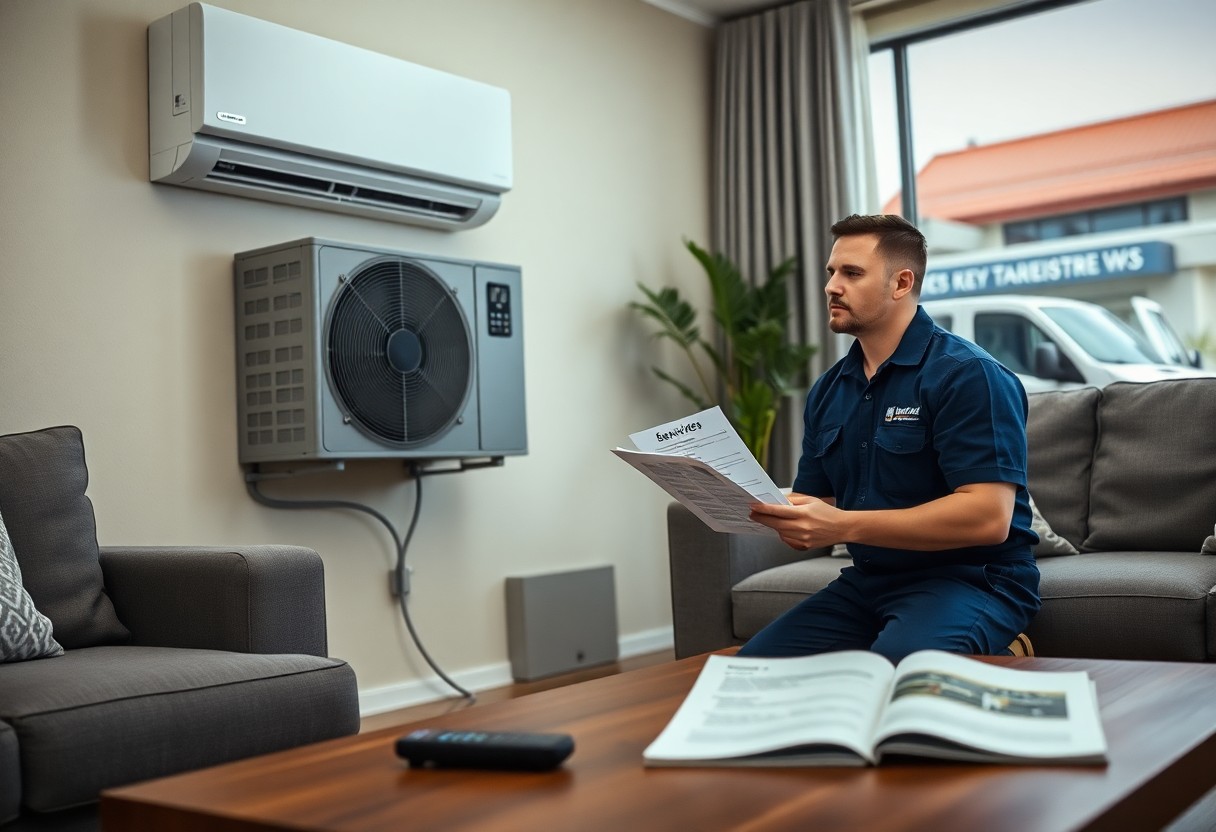
Key Takeaways:
- Choose reputable local Brisbane technicians with strong reviews and prompt response times for faster, climate-aware service in Carindale.
- Prioritise energy-efficient inverter split systems or ducted reverse-cycle units for reliable cooling and lower power bills during summer.
- Schedule a pre-summer service for filter cleaning, refrigerant checks and coil maintenance to improve performance and reduce breakdown risk.
- Use licensed installers who provide written quotes, clear warranties and documented aftercare to protect your investment.
- Install smart thermostats and zoning controls to optimise comfort and cut energy use across different rooms of the home.
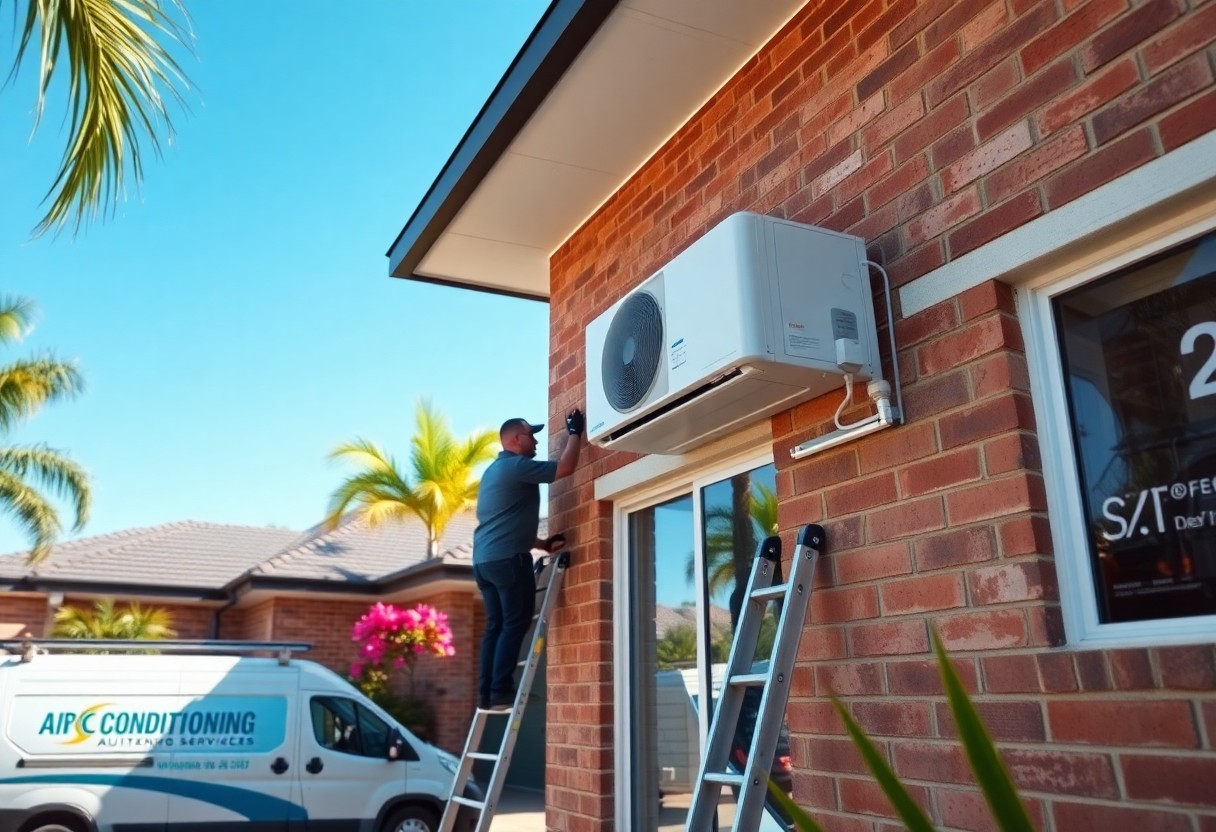
Importance of Air Conditioning in Summer
With Brisbane summers routinely topping 30-35°C and high humidity, your air conditioner is the difference between comfortable living and heat-related problems. A properly sized unit drops indoor temperatures by 6-12°C and controls humidity, limiting mould growth and reducing peak electricity demand by enabling timed zoning. You'll notice faster cooling in north-facing rooms and less strain on compressors when you choose systems matched to room size and insulation levels.
Benefits of Air Conditioning
Inverter split systems can cut running costs by up to 30% compared with older fixed-speed units, and zoned ducted setups give you control over each room so you only cool spaces you use. You'll get consistent sleep quality when temperatures stay between 20-24°C, and modern filters remove pollen and PM2.5 particles, helping allergy sufferers and reducing dust buildup on furnishings.
Health Considerations
Heat stress, dehydration and exacerbated respiratory conditions are common in the hottest months; keeping indoor temperatures around 22-24°C with relative humidity near 40-50% reduces these risks. You should prioritise filtration rated for allergens if someone in your home has asthma or COPD, and ensure elderly occupants avoid prolonged exposure above 28°C-emergency services see spikes in heat-related calls during prolonged heatwaves.
Regular maintenance cuts microbial growth and Legionella risk in systems that use evaporative cooling; you should clean or replace filters every 1-3 months and schedule a professional service annually. If you notice musty odours, reduced airflow or higher bills (often 10-20% increase), act promptly-replacing worn seals or servicing coils can restore efficiency and improve indoor air quality rapidly.
Types of Air Conditioning Systems
You'll find five main options commonly used in Carindale homes: split systems, ducted systems, multi-split units, evaporative coolers and portable units-each with trade-offs in cost, efficiency and installation footprint. Compare real numbers like 2.5-7 kW for splits or 10-25 kW for ducted systems, plus star ratings and typical Brisbane install prices, to match performance to your floorplan. After get multiple installer quotes and a sizing assessment to avoid oversizing.
| Split Systems | 2.5-7 kW; ideal for single rooms or small open areas; 3-5 star options; $1,200-$3,500 installed |
| Ducted Systems | 10-25 kW; whole-home zoning; concealed ducts; $8,000-$20,000+ install depending on roof access |
| Multi‑split | One outdoor unit, multiple indoor heads; saves space outdoors; good for multi-room upgrades |
| Evaporative Coolers | Low running cost in low-humidity weather; less effective on humid Brisbane nights; cheaper install |
| Portable Units | Flexible, low upfront cost; less efficient and noisier; best as temporary or spot cooling |
- Capacity (kW) matched to room volume and solar gain
- Energy rating (star/SEER) and annual running cost estimates
- Zoning options to avoid cooling unoccupied spaces
- Noise levels (dB) for bedrooms and living areas
- Installation complexity and ongoing maintenance needs
Split Systems
You'll typically pick a split system for single rooms, living areas or where minimal install work is preferred; capacities run 2.5-7 kW, SEER ratings commonly 4-7, and you can expect $1,200-$3,500 installed in Brisbane depending on brand and wall-mount complexity.
Ducted Systems
You'll opt for ducted when you want whole-house climate control and discrete aesthetics; these systems usually deliver 10-25 kW, support multiple zones, and require roof space and duct runs-installation often sits between $8,000 and $20,000-plus for typical Carindale homes.
When considering ducted systems, verify proper load calculations (a 3‑bed Carindale house often needs ~12-16 kW), ensure roof cavity access for ductwork, and plan zoning for living vs sleeping areas to cut running costs by up to 20-30%; schedule annual servicing, clean filters quarterly if heavily used, and ask installers for on-site measurements and a detailed energy estimate before committing.
Top Brisbane Air Conditioning Services
You'll find manufacturer-authorised dealers (Daikin, Mitsubishi Electric), independent HVAC specialists and 24/7 emergency teams across Brisbane offering same-day call-outs, inverter upgrades and seasonal tune-ups; many back work with 12-month labour warranties and offer energy-efficiency retrofits that can cut running costs by 10-30% on older systems.
Service Providers in Carindale
In Carindale you can access authorised dealers, local licensed technicians and specialist refrigeration contractors; typical call-out fees run $80-$150, routine servicing $120-$200, and most providers promise 24-48 hour responses with same-day options for emergency faults during summer peak.
Comparison of Services and Prices
When you compare offers, check total cost, response time, parts warranty and whether permits or gas/refrigerant work are included; expect maintenance $120-$200, emergency repairs $150-$400 plus call-out, split-system installs $1,200-$3,500 and ducted installs $4,000-$10,000 depending on complexity.
Service vs Typical Cost & Turnaround
| Service | Typical Cost & Turnaround |
|---|---|
| Regular maintenance | $120-$200; 1-2 hours; annual recommended |
| Emergency repair | $150-$400 plus call-out $80-$150; same-day to 48 hrs |
| Split-system install | $1,200-$3,500; same-day quote, 1-3 days install |
| Ducted system install/replace | $4,000-$10,000; multi-day install, includes commissioning |
| Filter replacement/clean | $25-$80; same-day or next visit |
You should request written quotes that itemise labour, parts and energy ratings, verify technicians are licensed for refrigeration and gas work, and prioritise providers offering at least 12 months labour warranty plus parts coverage; for example, a full Mitsubishi split install including basic commissioning typically falls between $1,500 and $3,200 depending on accessories and mounting complexity.
Installation and Maintenance Tips
You should site the outdoor unit on solid, level ground with 300-500 mm clearances to ensure airflow and lower noise; installers in Carindale often mount on anti-vibration brackets and use shade to reduce heat soak. Any final commissioning must include a pressure test and a digital refrigerant charge verified against manufacturer specs.
- Choose manufacturer-authorised installers to preserve warranty
- Opt for inverter models with 4-6 star energy ratings where possible
- Locate indoor units away from direct sun and doorways for even cooling
- Fit condensate lines with traps, access points and correct slope
Choosing the Right Size
You should size by room: small bedrooms 2.5-3.5 kW, master bedrooms 3.5-5 kW, open-plan living 5-7 kW, and whole-house multi-splits typically 12-20 kW depending on layout and insulation; a licensed installer using a load calculation will account for glazing, orientation and occupancy to avoid oversizing and short cycling.
Regular Maintenance Checklist
You should clean or replace filters every 1-3 months, book professional servicing every 6-12 months, clear condensate drains, clean outdoor coils, check refrigerant pressure, and inspect electrical connections and thermostat calibration to maintain efficiency and reliability.
Professional inspections should measure airflow, refrigerant superheat/subcooling and motor current; DIY tasks like vacuuming coils, replacing pleated filters and keeping 500 mm clearance around the outdoor unit take 10-30 minutes and can cut energy use by up to 15%. If you notice oil stains, ice on the evaporator or unusual noises, log operating hours and call your technician for a targeted diagnosis.
Energy Efficiency and Cost Saving Tips
Cutting run-hours and optimizing setpoints will lower bills during Carindale's 30-35°C spells: aim for 24-26°C, use timers to avoid daytime overcooling and clean filters monthly since clogged filters can raise energy use by about 10-15%. Schedule annual servicing with an authorised dealer to keep coils and refrigerant levels efficient, and seal windows and doors to reduce heat gain. Assume that combining a 1-2°C higher setpoint with ceiling fans and an inverter system can reduce annual cooling costs by roughly 10-25%.
- Set thermostat to 24-26°C and use a 1-2°C setback when you're out.
- Use ceiling fans (50-100W) to raise setpoint without losing comfort.
- Clean or replace filters every 1-3 months depending on use and pets.
- Seal gaps, add external shading and insulate attic/roof spaces.
- Program timers or smart controls for zoning to reduce run-hours.
Efficient Usage of Air Conditioning
You can cut energy by pairing AC with fans and zoning: fans lower perceived temperature by about 2-3°C while consuming ~50-100W versus an AC's 1.5-3.5kW, so running a fan and setting the AC to 26°C often feels as cool as 23-24°C. Close unused rooms, set timers for peak afternoon use, and avoid drastic setpoint swings; inverter units modulate output and keep steady temperatures with fewer on/off cycles, which reduces wear and short cycling.
Understanding Energy Ratings
You should prioritise higher star ratings and better SEER/EER numbers when comparing models: Australian labels show annual kWh and star ratings - a higher star and greater SEER mean lower running costs for the same capacity. Look for inverter technology and an annual energy consumption figure to compare real-world costs rather than relying on capacity alone.
To read labels effectively, compare two units with the same cooling capacity by their kWh/yr: for example, a 2.5kW 4‑star unit might show ~900 kWh/yr versus a 5‑star equivalent at ~650 kWh/yr, indicating roughly 25-30% lower energy use. Also factor in inverter systems, which typically reduce part‑load consumption by ~20-40% compared with fixed‑speed models, and estimate running costs using local tariffs (e.g., $0.30/kWh) to project annual bills.
Customer Reviews and Recommendations
You should use reviews to separate quick fixers from reliable long-term partners: authorised dealers often score 4.6-4.9/5 for installs while independent technicians score 4.2-4.7/5 for repairs, with many Carindale reviewers citing same-day response and clear post-service invoices.
Local Feedback
Scan Google and local community groups for dated reviews that include photos and invoice figures; you'll find average reported response times of 2-6 hours, typical repair costs of $120-$350, and repeat customers praising warranty follow-up and honest diagnostics.
Case Studies
Below are concise, measurable examples from Carindale homes that show installation and maintenance outcomes you can compare directly when choosing a service provider.
- Your 3-bedroom Carindale home - 2019 7.1 kW inverter split install, total cost $3,400; summer energy use fell 22% (monthly $85 → $66) and indoor temps held at 24-25°C after install.
- Your townhouse ducted system - tune-up including coil clean and 220 g R‑410A top-up, service $190; coefficient of performance improved 14%, runtime dropped from 9 to 6 hours/day, estimated bill reduction 18%.
- Your rental unit - filter swap and thermostat recalibration, service $120; tenant complaints fell from 3/month to 0, and tenant satisfaction survey rose to 4.7/5 within four weeks.
You can use these case studies to set expectations for cost, installation size, and realistic savings; compare kilowatt capacity, measured kWh pre/post, and documented runtime reductions when requesting quotes to validate claims.
- Your authorised-dealer install - arrival within 4 hours, 5-year parts/2-year labour warranty, measured SEER improvement ~18%, summer consumption dropped from 1,850 kWh to 1,450 kWh (≈21.6% savings).
- Your emergency repair by an independent tech - arrival 90 minutes, repair cost $220, avoided compressor replacement ($1,600), projected service life extension 4 years based on post-repair diagnostics.
- Your preventative maintenance plan - annual visit $160, three-year total saved estimated $720 from avoided major repairs, refrigerant leak incidents down 75% and average seasonal runtime reduced by 1.8 hours/day.
FAQ
Q: Which Brisbane air conditioning systems work best for Carindale homes during summer?
A: Reverse‑cycle inverter split systems and ducted reverse‑cycle systems are the most practical choices. Inverter technology delivers efficient, responsive cooling and better humidity control-important in Brisbane's humid summers-while ducted systems with zoning suit whole‑house comfort. For smaller homes or single rooms, multi‑split or high‑efficiency wall‑mounted units give targeted cooling with lower running costs. Choose units with high star ratings and correct room capacity based on a load calculation rather than unit size alone.
Q: What pre‑summer services should Carindale homeowners book to keep systems reliable?
A: Book a full service that includes filter cleaning or replacement, evaporator and condenser coil cleaning, refrigerant level check, condensate drain clearing, electrical and thermostat inspection, airflow and duct checks, and outdoor unit clearance. Technicians should test system performance and safety controls. Schedule servicing before peak season to avoid delays and higher call‑out fees during summer heatwaves.
Q: How do I pick a reputable air conditioning service provider in Carindale or greater Brisbane?
A: Choose licensed, insured technicians with local Brisbane experience and positive reviews. Request itemised, written quotes and ask about sizing methodology (room‑by‑room load calculation), manufacturer authorisations, warranty terms, and after‑sales support. Verify they comply with Australian standards and can handle permits or safety certificates if needed. Comparing three quotes helps balance price and service quality.
Q: Which services improve indoor air quality and humidity control for Carindale summers?
A: Regular duct and coil cleaning, high‑efficiency particulate filters (MERV/HEPA options where compatible), media filters, and UV‑C treatments reduce allergens and microbial growth. Reverse‑cycle systems naturally reduce humidity, but dedicated dehumidifiers or whole‑home humidity control and proper ventilation can help in persistent humidity. Ensure condensate lines and drip pans are clear to prevent mould and odours.
Q: How can I minimise running costs while keeping Carindale homes comfortable this summer?
A: Combine an energy‑efficient inverter system with correct sizing, good insulation, and zoning to avoid cooling unused areas. Use a smart or programmable thermostat set to sensible temperatures (around 24-26°C for many households), ceiling fans to raise thermostat setpoints, and scheduled maintenance to preserve efficiency. Shading outdoor units, sealing windows and doors, and comparing energy ratings and running‑cost estimates when selecting equipment will further reduce bills.