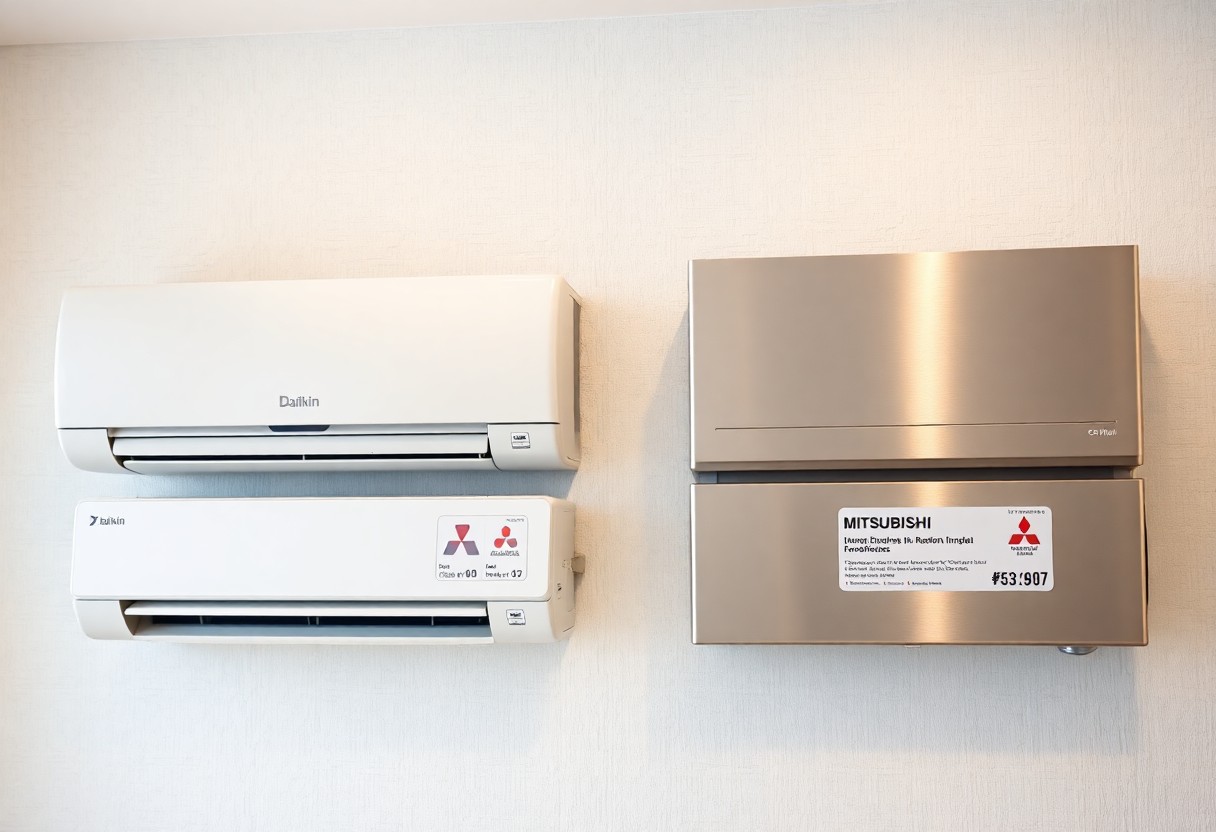
Daikin vs Mitsubishi Split Systems for Performance & Reviews
Many homeowners are faced with the decision of choosing between Daikin and Mitsubishi split systems for their heating and cooling needs. Both brands offer advanced technology and reliable performance, making it important for you to understand their features, efficiency, and customer reviews. This guide will help you evaluate which system aligns better with your preferences and requirements, enabling you to make an informed choice for your home comfort.
Key Takeaways:
- Daikin units are generally known for their energy efficiency, often resulting in lower utility bills.
- Mitsubishi systems are praised for their quiet operation and advanced noise-reduction technology.
- Both brands offer reliable performance, but Daikin tends to have a wider range of models and features.
- Mitsubishi has a strong reputation for superior customer service and warranty support.
- User reviews often highlight Daikin’s ease of installation compared to Mitsubishi systems.

Overview of Split Systems
Split systems are an efficient solution for heating and cooling spaces, allowing you to control temperatures in individual rooms rather than using centralized systems. These systems consist of two main components: an indoor unit that distributes air and an outdoor unit that dissipates heat. This design leads to lower energy consumption, providing you with optimal comfort and cost savings.
What is a Split System?
A split system is a type of air conditioning unit that consists of an outdoor compressor and one or more indoor air-handling units. This design helps maintain a comfortable indoor environment by transferring heat from inside to the outside. The separation of components allows for flexibility in installation and the ability to cool or heat individual rooms based on your needs.
Types of Split Systems
There are several types of split systems, each designed to cater to different needs and preferences. The most common types include wall-mounted units, ceiling cassettes, and ducted systems. Each type offers unique features, such as installation flexibility and aesthetics. Understanding the differences will help you choose the best option for your space.
| Type | Description |
|---|---|
| Wall-Mounted | Common in residential settings, easy to install, and blends well with interiors. |
| Ceiling Cassette | Installed in the ceiling, providing a subtle option that’s ideal for offices and larger spaces. |
| Ducted | Delivers air through ducts, perfect for whole-home solutions and maintaining aesthetics. |
| Multi-Split | Connects multiple indoor units to one outdoor unit, suitable for households with varied cooling needs. |
| Inverter Split | Utilizes variable speed compressors for energy efficiency and consistent temperature control. |
Different types of split systems cater to various environments, from residential homes to commercial spaces. Wall-mounted units are often chosen for their simplicity, while ducted systems provide a discreet option for whole-home climate control. Multi-split systems are advantageous for homes with multiple zones, and inverter split systems offer enhanced energy savings. Recognizing the characteristics and benefits of each type will empower you to select the most suitable system.
- Wall-Mounted: Versatile and easy to install.
- Ceiling Cassette: Ideal for larger spaces, maintaining a low profile.
- Ducted: Offers seamless integration into home design.
- Multi-Split: Connects multiple rooms efficiently.
- Inverter Split: Delivers energy efficiency and comfort.
| Type | Description |
|---|---|
| Wall-Mounted | Common in residential settings, easy to install, and blends well with interiors. |
| Ceiling Cassette | Installed in the ceiling, providing a subtle option ideal for offices and larger spaces. |
| Ducted | Delivers air through ducts, perfect for whole-home solutions and maintaining aesthetics. |
| Multi-Split | Connects multiple indoor units to one outdoor unit, suitable for households with varied cooling needs. |
| Inverter Split | Utilizes variable speed compressors for energy efficiency and consistent temperature control. |
Daikin Split Systems
Daikin split systems stand out for their advanced technology and high efficiency, making them a popular choice for residential and commercial applications. You can expect quiet operation and significant energy savings, thanks to their inverter technology, which adjusts the power based on the cooling or heating demand. Daikin’s commitment to quality ensures longevity, backed by a solid warranty, giving you peace of mind with your purchase.
Performance Features
Featuring a range of performance-enhancing elements, Daikin split systems include inverter technology, which allows for smooth temperature control and increased energy efficiency. You also benefit from advanced air purification systems that eliminate allergens and pollutants, creating a healthier indoor environment. Enhanced features like smart controls enable you to manage temperature settings remotely, providing flexibility and convenience.
Customer Reviews
Customer feedback on Daikin split systems consistently highlights their efficiency and performance. Many users appreciate the quiet operation and sleek design, which fit seamlessly into various home aesthetics. Positive reviews often mention improved air quality and effective temperature control, reinforcing their preference for Daikin’s reliability in climate management.
In numerous customer reviews, you’ll find that reliability is a cornerstone of Daikin products. Users report satisfaction with the units’ energy efficiency, noting a decrease in utility bills after installation. Many testimonials commend the prompt customer service provided during installation and maintenance, leading to a generally positive ownership experience. Overall, the consensus is clear: Daikin split systems deliver on their promises, making them a preferred choice for many homeowners.
Mitsubishi Split Systems
Performance Features
Mitsubishi split systems are renowned for their energy efficiency, often boasting SEER ratings exceeding 20. They utilize advanced inverter technology, allowing for precise temperature control and reduced energy consumption. With features like quiet operation and customizable airflow settings, these systems ensure optimal comfort while minimizing noise levels, making them an ideal choice for residential spaces.
Customer Reviews
Customers frequently highlight their satisfaction with Mitsubishi split systems, particularly appreciating their reliability and efficiency. Many users report significant energy savings and effective climate control even in extreme weather conditions. Positive reviews often emphasize the units’ sleek design and ease of installation, reinforcing the brand’s reputation for quality and performance.
An analysis of customer feedback across various platforms reveals a consistent theme: users value the superior performance of Mitsubishi systems. With many reviewers noting up to 30% reduction in energy bills, the investment pays off quickly. A significant number of homeowners also mention the systems’ durability, often lasting over a decade with minimal maintenance, solidifying Mitsubishi’s status as a trusted choice in the market.
Comparison of Daikin and Mitsubishi
| Feature | Daikin | Mitsubishi |
|---|---|---|
| Energy Efficiency | High SEER ratings (up to 27) | Exceptional efficiency (up to 26 SEER) |
| Cost | Generally higher initial investment | Competitive pricing, often more budget-friendly |
| Technology | Inverter technology for smoother operation | Advanced filtration and humidity control |
Energy Efficiency
Both Daikin and Mitsubishi units excel in energy efficiency, with SEER ratings reaching impressive heights. Daikin offers models reaching up to 27 SEER, appealing to those seeking the most economical long-term operation. In comparison, Mitsubishi models often achieve up to 26 SEER, ensuring you significantly reduce energy consumption while enjoying optimal comfort in your space.
Cost Analysis
Your budget considerations will influence the choice between Daikin and Mitsubishi split systems. Daikin generally commands a higher upfront investment due to its premium features and technology. On the other hand, Mitsubishi provides a range of options that can be more wallet-friendly, making it an attractive choice for those seeking efficiency without breaking the bank.
While Daikin may present a higher initial cost, your investment could pay off over time in energy savings. If you prioritize advanced technology and are willing to pay a premium, Daikin systems might align better with your needs. Conversely, Mitsubishi’s pricing structure allows flexibility, often catering to budget-conscious consumers without sacrificing vital features or performance. Evaluating both brands based on your specific performance expectations and financial constraints is key to making an informed decision.

Installation and Maintenance
Both Daikin and Mitsubishi offer straightforward installation processes, though hiring a professional is recommended for optimal results. Proper installation ensures efficiency and longevity of your split system. You should consult with an experienced technician for site assessment and to determine the best configuration for your space.
Installation Process
The installation process typically involves mounting the indoor unit, connecting refrigerant lines, and setting up an outdoor unit. You will need to ensure proper electrical connections and drainage systems are in place. A thorough check of the installation will help avoid any future issues.
Maintenance Tips
To keep your split system running efficiently, regular maintenance is necessary. Schedule seasonal check-ups, clean or replace filters every three months, and inspect the outdoor unit for debris. This ensures optimal performance and prolongs the lifespan of your system.
- Keep indoor units free from dust buildup.
- Regularly check for leaks around ducts and connections.
- Schedule professional servicing at least once a year.
- This will help maintain efficiency and reduce energy costs.
As part of your maintenance routine, be proactive in addressing any signs of trouble, such as unusual noises or inconsistent cooling. Clear debris from the outdoor unit and ensure adequate airflow. This will aid in preventing major repairs and enhance the unit’s overall performance.
- Monitor the system for any abnormal behavior.
- Document maintenance activities for future reference.
- Educate yourself on the intricacies of your system model.
- This can help you troubleshoot minor issues and prompt timely professional assistance.
Summing up
Hence, when comparing Daikin and Mitsubishi split systems for performance and reviews, you should consider factors like energy efficiency, cooling capacity, and user experiences. Both brands offer robust options, but your specific needs—such as room size and climate—will influence the best choice for your home. Daikin is often praised for its innovative technology, while Mitsubishi excels in quieter operation. Ultimately, your decision should align with your preferences and requirements for a comfortable living environment.
FAQ
Q: What are the main differences in cooling performance between Daikin and Mitsubishi split systems?
A: Daikin split systems are known for their advanced inverter technology, which provides efficient cooling with precise temperature control. Mitsubishi systems typically offer robust cooling capabilities in high ambient temperatures, making them ideal for hotter climates.
Q: How do Daikin and Mitsubishi systems compare in energy efficiency ratings?
A: Both Daikin and Mitsubishi offer high energy efficiency ratings, often featuring SEER ratings above 20. However, Daikin systems often outperform in energy efficiency due to their innovative technologies and designs focused on reducing energy consumption.
Q: Which brand has better user reviews for reliability and durability?
A: Mitsubishi is frequently praised in user reviews for its reliability and durability, particularly in extreme weather conditions. Daikin also receives positive feedback but is sometimes noted for requiring more maintenance over time compared to Mitsubishi units.
Q: Are there differences in the installation process for Daikin and Mitsubishi split systems?
A: Installation processes for both brands are similar, but Mitsubishi systems may require slightly more specialized knowledge due to their unique technology. Daikin systems often offer more versatile installation options, which can be beneficial in varied home layouts.
Q: Which brand offers better warranty options and customer support?
A: Daikin typically offers longer warranty periods for their equipment, often up to 12 years, alongside robust customer support. Mitsubishi also provides good warranty options, but their customer service may vary by region, impacting overall support experiences.
