Many Paddington residents find choosing Brisbane air conditioning services requires checking licences, insurance and energy-efficient options so you avoid costly repairs and compliance issues; you should compare quotes, review local customer feedback, verify manufacturer warranties, and confirm service guarantees and response times to ensure reliable installation and ongoing maintenance that suits your home's layout and budget.
Key Takeaways:
- Use licensed, insured contractors - confirm QBCC registration, trade qualifications and adequate public liability cover before work begins.
- Prefer companies with local Brisbane/Paddington experience to ensure correct system sizing, ductwork solutions and advice for the subtropical climate.
- Obtain detailed written quotes listing equipment, star energy ratings, capacity, installation scope, timelines and any permit or disposal costs.
- Compare manufacturer and installer warranties plus available maintenance plans and emergency call‑out response times.
- Check references and online reviews, verify council permit compliance, and insist on testing, commissioning and completion certificates after installation.
Understanding Air Conditioning Systems
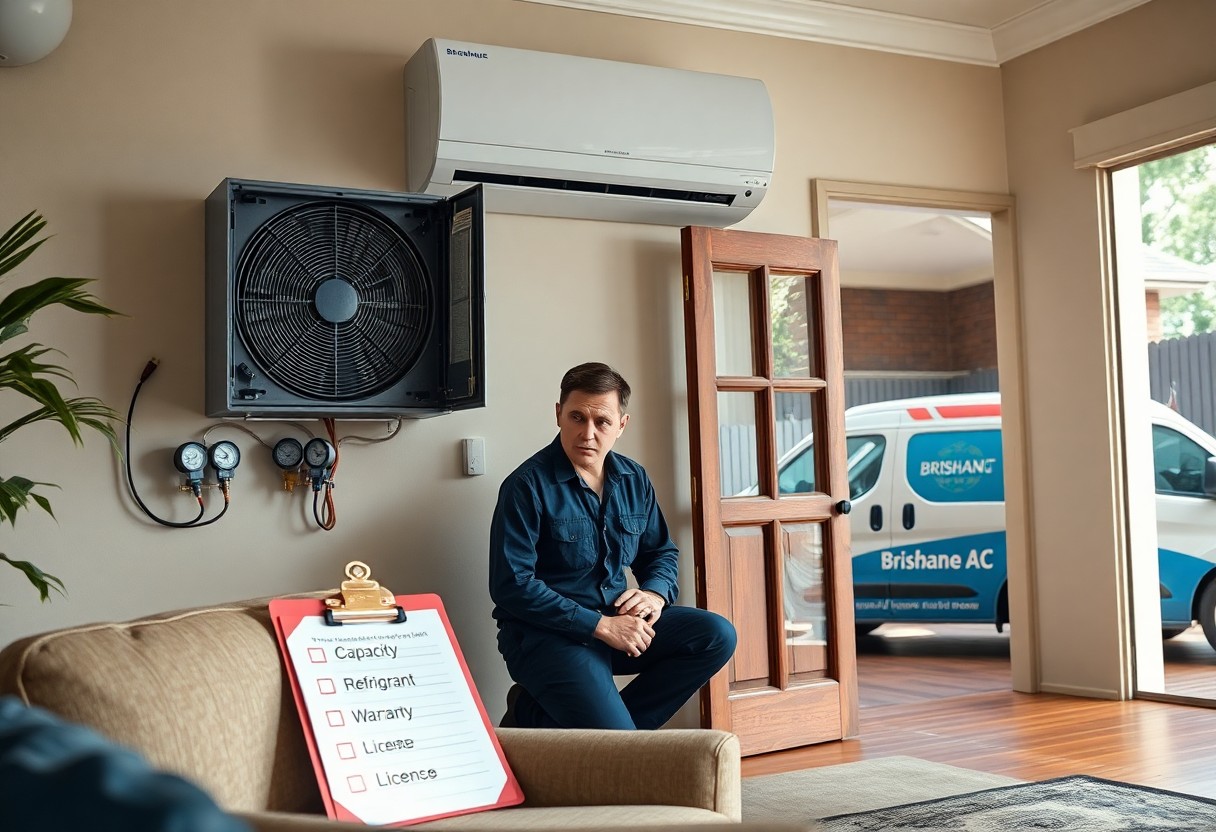
You should know that a system's compressor, condenser, evaporator and controls determine capacity, noise and running cost; typical residential units last 10-15 years with seasonal service every 12 months. Modern systems use R32 or R410A refrigerants and inverter technology to vary output and cut energy use by up to 30% compared with fixed-speed units. Check matched indoor/outdoor capacities (kW) and airflow (L/s) so your chosen unit will cool evenly without short-cycling or excessive humidity.
Types of Air Conditioners
You'll encounter split systems, ducted systems, multi-split setups, evaporative coolers and window units; each suits different house layouts, noise tolerances and budget constraints, so match type to room count and insulation rather than price alone.
- Split (wall-mounted): efficient for single rooms, common 2.5-7 kW sizes, low installation cost for retrofits.
- Ducted: whole-home solution with central return, better for open-plan homes but higher upfront and ceiling space needed.
- Multi‑split: connects several indoor units to one outdoor unit, saves outdoor space and offers zone control.
- Evaporative: low running cost in dry climates, provides fresh air but less effective on humid Brisbane days.
- This is where you weigh installation complexity, running cost and noise when choosing the right type for your property.
| Type | Best use / note |
|---|---|
| Split system | Ideal for single rooms or small homes; quick install and zoned control |
| Ducted | Whole-house comfort for larger or renovated homes; higher install cost |
| Multi‑split | Flexible zoning with fewer outdoor units; good for multi-room retrofits |
| Evaporative | Energy‑efficient in dry weather; less effective when humidity is high |
Energy Efficiency Ratings
You'll see star ratings, estimated annual running costs and technical metrics like SEER and EER on Australian labels; higher stars and SEER mean lower operating bills, and inverter compressors generally outperform fixed‑speed units by 20-30% in typical use, so prioritise those when aiming to cut your monthly power spend.
Delve deeper by comparing the label's estimated annual cost and the unit's SEER/EER: SEER measures cooling efficiency over a season, while EER is instantaneous at a set condition. Calculate likely running cost as kW draw × hours used × your tariff-e.g., a 2.5 kW unit running 8 hours/day at $0.35/kWh consumes 20 kWh/day, about $7/day. You should size the system to actual room heat load, choose inverter models for variable loads, and check quoted annual running costs rather than just headline stars to see real savings in Paddington's mixed subtropical climate.
Evaluating Air Conditioning Services
When comparing providers, verify licensing, warranties, and energy-efficiency claims; ask for QBCC registration and ARC Refrigerant Handling Licence, proof of $10M public liability, and written quotes showing completion times and a 3-5 year workmanship warranty. You should also compare system star ratings (e.g., 3.5-5 stars) and request examples of similar Paddington terrace installs to judge workmanship and duct routing in older homes.
Credentials and Experience
You must confirm QBCC registration, an ARC refrigerant licence and trade certificates, plus at least 3-5 years' residential experience and manufacturer training (Daikin, Fujitsu, Mitsubishi). Check for portfolios of 10+ recent installs, insurance details, and any ISO or NABERS credentials; technicians with these qualifications are more likely to follow compliance and warranty procedures correctly.
Customer Reviews and Testimonials
Use Google, Facebook and ProductReview.com.au to find at least 50 reviews and aim for a 4.5+ average, prioritising feedback from the last 12 months; you should look for repeated praise about punctuality, sticking to quotes, and effective after-sales support, while noting how the company responds to any negative posts.
Ask the contractor for contactable references-call two or three recent Paddington clients and inquire about total cost vs quote, installation duration, any unexpected issues and whether energy bills fell (many inverter upgrades report 20-30% savings). Verify photos of finished work, confirm the specific crew who will attend, and treat multiple local referrals for the same team as a strong positive signal.
Key Questions to Ask Contractors
Ask for QBCC registration, trade qualifications, and public liability limits, and insist on written quotes detailing model numbers, SEER/COP ratings, refrigerant type (R32 vs R410A), and a Manual J or equivalent load calculation. Request at least three comparable quotes, check 3-5 local references or recent job photos, confirm removal/disposal of the old unit, ask about deposit (commonly 10-30%), and get a clear start-to-finish timeline and payment schedule in writing.
Installation Process and Timeline
Have the contractor outline each step: site survey and load calculation, permit or meter upgrade if needed, indoor/outdoor unit placement, duct modifications, commissioning and handover. Small split systems typically take 3-6 hours with 2 installers; multi-head or ducted installs can take 1-3 days or longer, while major electrical or structural work may add weeks. Ask who will be on-site, contingency plans for delays, and an estimated completion date.
Warranty and Maintenance Options
Clarify manufacturer versus installer warranties-manufacturers often offer 5-10 year parts warranties while installers typically give 1-2 year labour guarantees-and ask about conditions that void cover. Confirm whether warranty registration is required within a set period (often 30-60 days), the response time for service calls (commonly 24-72 hours), and whether annual maintenance plans are included or available at a quoted price.
Check warranty fine print for specific inclusions such as compressor, heat exchanger, and electronic controls, plus exclusions like corrosion or improper maintenance. Verify if routine servicing (usually recommended every 6-12 months) is needed to keep the warranty valid; contractors often require proof of service, so keep receipts. Consider a maintenance plan - many local firms offer plans from about $120-$300/year that include filter changes, coil cleaning, and priority call-outs, which can prevent costly failures and protect your warranty.
Assessing Costs and Budgeting
Estimate total project cost by combining unit price, installation and ongoing maintenance. In Paddington a single-split system typically costs A$1,200-A$3,500 installed, while ducted systems range A$5,000-A$12,000; routine service runs A$90-A$150 per visit. You should budget for a 10-15% contingency to cover unexpected repairs, parts or access complications.
Pricing Structures
Fixed-price quotes cover parts and labour for a defined scope, giving you certainty-expect A$1,200-A$4,000 for a full-unit install. Repairs often use hourly rates of A$80-A$130 plus call-out fees (A$90-A$150). Look for package deals (install plus yearly servicing) that can save 10-20% compared with one-off bookings.
Hidden Fees to Consider
Permit and council fees can add A$100-A$800, electrical upgrades A$200-A$1,200, and disposal or refrigerant recovery A$50-A$600. Access or height premiums for multi-storey properties commonly add A$200-A$600, while obsolete R22 refrigerant disposal/replacement can cost several hundred dollars extra.
Ask for an itemised quote to reveal extras like asbestos-safe removal (A$300-A$1,000), survey or structural bracketing (A$150-A$500), and separate commissioning/testing fees (A$120-A$300). Build a 10-15% contingency into your budget and confirm warranties require licensed electrical upgrades, since unlicensed work can void coverage.
Understanding Local Regulations
Brisbane regulations tie into Queensland building laws, Council codes and national standards, so you should check approvals for external units, roof penetrations, heritage overlays and noise setbacks before booking work. For example, ducted-system installs that alter rooflines normally require building approval and a QBCC-licensed contractor for jobs over $3,300, while routine split-system swaps often avoid development approval but still must meet AS/NZS standards and be installed by licensed trades.
Required Permits
You may need a building approval or development application when installations change external walls, roofs or access; plumbing or gas work must be done by licensed trades and may require separate permits. For refrigerant handling and major plant you must engage a licensed refrigeration mechanic and the installer should confirm any Council local law conditions, heritage constraints or neighbour notification requirements before starting.
Compliance with Brisbane Standards
You must meet Australian standards such as AS/NZS 3666 (air-handling hygiene), AS/NZS 1668.2 (mechanical ventilation) and AS/NZS 3000 (electrical wiring), and ensure equipment complies with national energy-efficiency MEPS ratings and manufacturer specs. Council also enforces noise and setback requirements, so choose units with appropriate decibel ratings and site them to minimise nuisance for nearby properties.
Ask your installer for proof: compliance certificates, a commissioning report, wiring/electrical safety sign-off and a maintenance schedule showing coil and drain cleaning intervals. Contractors who work to AS/NZS 3666 will document microbial control steps and filter schedules; electricians should provide an electrical compliance certificate under AS/NZS 3000, and registered technicians should register warranties and refrigerant work per state licensing rules.
Importance of Regular Maintenance
Regular upkeep prevents small faults becoming costly failures: you should schedule professional inspections every 6-12 months, change or clean filters monthly or quarterly depending on pets and dust, and test thermostat accuracy seasonally. Proper maintenance typically preserves manufacturer warranties, sustains energy efficiency, and prolongs service life-well-maintained split systems commonly last 12-15 years versus shorter lifespans when neglected.
Scheduled Services
You should book a professional service at least once a year, and twice annually for high-use or ducted systems-ideally before summer and winter. Technicians will clean coils, check refrigerant levels, inspect electrical connections, and verify airflow; expect typical Brisbane service fees in the $150-$300 range per visit. Keep written service records to support warranty claims and track recurring issues.
Signs Your System Needs Attention
Watch for rising power bills, uneven room temperatures, reduced airflow, persistent odors, unusual noises (clanking, hissing), frequent cycling, or water pooling around the unit-any of these indicate you should act. If performance drops by a noticeable margin or noise starts suddenly, arrange an inspection rather than waiting for a breakdown.
When you spot symptoms, start by checking accessible elements: replace clogged filters, clear external unit debris, and ensure vents are open. If problems persist-especially refrigerant hissing, a burning smell, or leaks-shut the system off and call a licensed Brisbane technician within 48 hours. Prompt intervention often avoids compressor failure or refrigerant loss, which can cost 20-70% of the price of a new unit to repair or replace.
Summing up
Following this, ensure you verify licences, insurance and local Brisbane experience, check reviews and references, compare detailed quotes, confirm warranties and maintenance plans, and ask about energy-efficient models and correct sizing for your home. Make sure the provider complies with local regulations and offers transparent pricing, clear timelines and post-installation support. Choosing a certified, well-reviewed technician protects your investment and keeps your home comfortable and safe.
FAQ
Q: What licences, registrations and insurance should Paddington residents check before hiring Brisbane air conditioning services?
A: Verify the technician holds appropriate Queensland licences and registrations for air-conditioning and refrigeration work, and is ARC‑accredited if handling refrigerants. Confirm they have public liability insurance and workers' compensation cover. Ask to see licence numbers and insurance certificates, and obtain written confirmation that the installation will comply with local council requirements and any Queensland Building and Construction Commission (QBCC) rules that apply.
Q: How can I be sure the system size and efficiency are right for my Paddington home?
A: Require a professional heating/cooling load assessment rather than a rule of thumb. The contractor should size the unit based on room dimensions, insulation, glazing, occupancy and Brisbane's climate. Compare energy star ratings, EER/SEER figures and inverter technology options, and ask for estimated running costs for typical summer use. Proper sizing avoids short cycling, poor comfort and higher bills.
Q: What should I expect in written quotes, warranties and final documentation?
A: Get an itemised written quote covering equipment model, capacity, installation labour, materials, permit fees, removal of old equipment and any additional work (electrical, ducting). Confirm manufacturer warranty and installer/service warranty durations and what actions void them. Insist on a compliance certificate, final test results, and clear terms for after‑sales support and fault rectification.
Q: How important is local experience and can I ask for references specific to Paddington or Brisbane?
A: Local experience matters because Paddington's older terraces, narrow access and potential heritage overlays create unique installation challenges. Choose a contractor familiar with Brisbane building styles, traffic and permit processes. Request recent local references or photos of completed jobs in inner‑city suburbs, and check online reviews for responsiveness during peak summer months.
Q: What ongoing maintenance and emergency support should I secure once the system is installed?
A: Ask about recommended service intervals, what each service includes (filters, coil cleaning, refrigerant pressure checks, electrical safety), and whether they offer tailored maintenance plans with priority call‑outs. Confirm emergency response times and after‑hours support costs, and obtain written advice on simple homeowner maintenance tasks to preserve efficiency and warranty cover.