Baby sleep can be significantly impacted by the settings of your air conditioning system. As a Brisbane parent, you need to understand how temperature and airflow influence your little one's rest. This guide will help you optimize your AC settings to support healthier sleep patterns for your baby, ensuring they wake up refreshed and happy. Keeping your environment comfortable is key to nurturing better sleep habits, so let's explore how to achieve the ideal conditions for your child.
Key Takeaways:
- Maintain a consistent temperature between 20-22°C for optimal sleep conditions.
- Use a fan in conjunction with the AC to circulate air and prevent drafts.
- Set the AC to a timer to run for specific hours, ensuring a cool environment before bedtime.
- Avoid placing the crib directly under the AC vent to prevent direct airflow on the baby.
- Regularly clean and maintain your AC unit to ensure it's functioning properly for air quality.
Types of AC Systems
Understanding different air conditioning systems can help you choose the best option for your baby's sleep environment. Each type offers varying functionalities, installation methods, and cooling capacities that can significantly impact indoor air quality and comfort.
- Central Air Conditioning
- Split System Air Conditioners
- Window Air Conditioners
- Portable Air Conditioners
- Ductless Mini-Split Systems
Perceiving the nuances in these systems allows for informed decisions tailored to your home and your baby's requirements.
| AC Type | Features |
|---|---|
| Central Air Conditioning | Whole-home cooling, quiet operation, energy-efficient |
| Split System Air Conditioners | Flexible installation, space-saving, targeted cooling |
| Window Air Conditioners | Cost-effective, easy installation, limited to one room |
| Portable Air Conditioners | Movable, suitable for various spaces, requires venting |
| Ductless Mini-Split Systems | Zone control, low visibility, silent operation |
Central Air Conditioning
Central air conditioning systems circulate cool air through ductwork, maintaining a consistent temperature in multiple rooms. This option minimizes noise, making it ideal for your baby's sleep. A well-tuned central system can also help regulate humidity levels, vital for creating a comfortable sleep atmosphere.
Split System Air Conditioners
Split system air conditioners consist of two main components: an indoor unit and an outdoor unit. These systems are perfect for maintaining comfortable temperatures without extensive ductwork. Their compact design allows for flexible placement, making it easier to position the unit away from your baby's crib, further enhancing their sleep quality.
Split system air conditioners often include advanced features, such as programmable settings and remote controls, allowing you to tailor the cooling experience. Many models operate quietly, which is crucial for minimizing disturbances during nap times and overnight sleep. Additionally, their ability to target specific zones in your home can help create an optimal sleeping environment for your baby while reducing energy consumption compared to central air systems.
Factors Affecting Baby's Sleep
Multiple elements can influence your baby's sleep, including noise levels, lighting, and room temperature. Each factor plays a role in creating an optimal sleep environment that supports your baby's natural sleep patterns. Consider these points:
- Temperature fluctuations
- Humidity balance
- Noise interference
- Lighting conditions
After addressing these areas, you can create a more conducive sleeping environment for your little one.
Temperature Settings
Ideal temperature settings for your baby's room typically range from 20°C to 22°C (68°F to 72°F). Monitoring the thermostat can help maintain this comfortable temperature, ensuring your baby remains cozy and sleeps soundly. Overheating can disrupt sleep cycles, while being too cold may lead to discomfort.
Humidity Levels
| Humidity Level | Effects on Sleep |
|---|---|
| Below 30% | Can dry out your baby's skin and respiratory tract |
| 30% - 50% | Ideal range, promotes comfort and health |
| Above 50% | May increase discomfort and promote mold growth |
Humidity Levels
Humidity level is vital for your baby's comfort while sleeping. Maintaining levels between 30% and 50% is most beneficial, preventing both dryness and excessive moisture. High humidity can lead to overheating, while low levels may cause skin irritation or respiratory issues. Using a hygrometer can help you accurately monitor the room's humidity to ensure your baby sleeps soundly.
Tips for Optimal AC Use
To ensure a comfortable sleeping environment for your baby, consider the following optimal AC use tips:
- Set your AC to a stable temperature.
- Utilize curtains to block out sunlight during the day.
- Limit the use of ceiling fans if your AC is effective.
- Keep air filters clean for efficient airflow.
- Monitor humidity levels for added comfort.
The Does AC Have Side Effects on Babies? article offers further insights.
Recommended Temperature Range
Optimal sleeping temperatures for babies typically range between 20°C to 22°C. Staying within this window promotes better sleep quality and reduces the risk of overheating. Babies may show signs of discomfort if temperatures vary significantly from this range. Below is a breakdown of temperature impacts:
Temperature Impact on Sleep Quality
| Temperature (°C) | Impact |
|---|---|
| Below 18 | Chilling; may cause discomfort. |
| 20-22 | Ideal for restful sleep. |
| Above 24 | Risk of overheating; disrupted sleep. |
Regular Maintenance Checks
Conducting regular maintenance checks on your AC ensures it operates efficiently. Filtration systems can accumulate dust and allergens, affecting air quality. Regular cleanings prevent potential breakdowns, and checking refrigerant levels maintains optimal cooling performance. Schedule professional assessments annually, and consider DIY checks monthly for filter cleanliness.
Regular maintenance not only prolongs the lifespan of your AC unit but also ensures your baby sleeps in a healthier environment, free of irritants. During these checks, inspect ducts for leaks and monitor the system's performance to catch any issues early. This proactive approach protects your investment while optimizing your baby's sleep conditions.
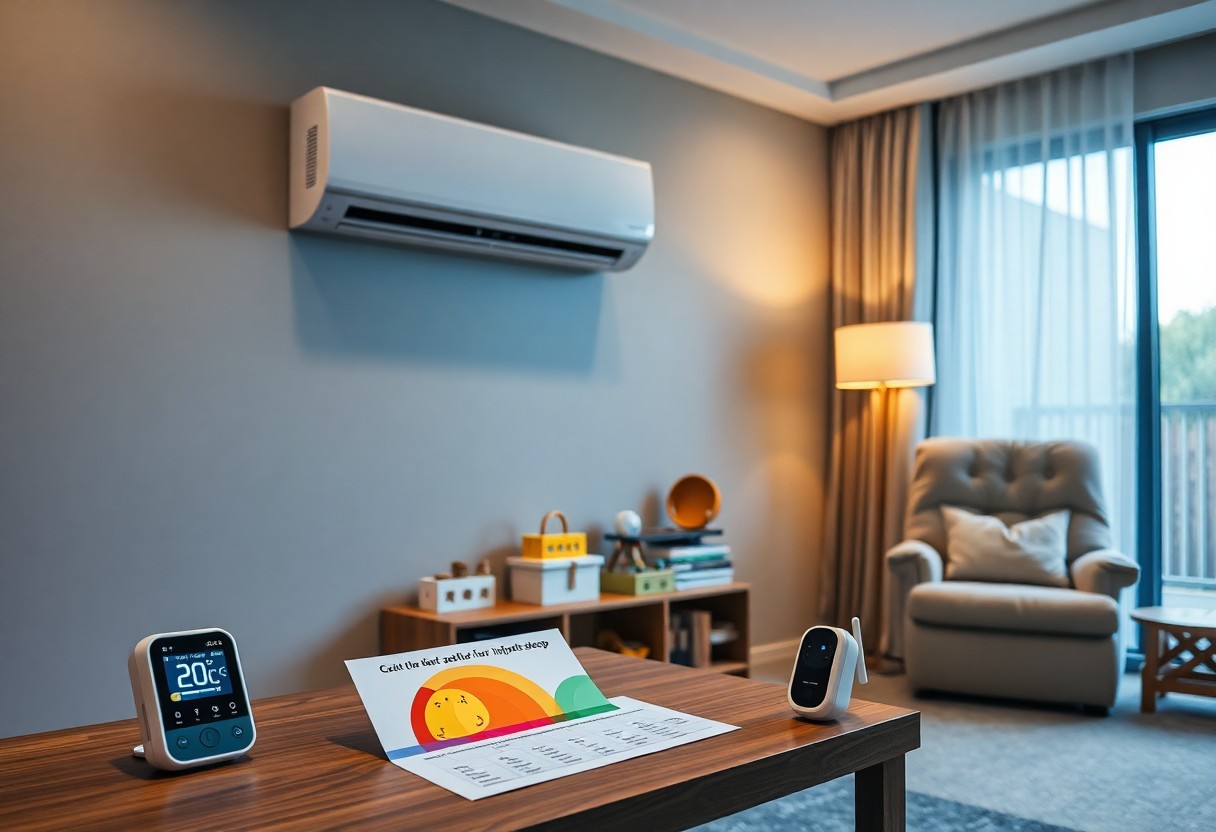
Step-by-Step Guide to Setting Up Your AC
| Step | Description |
| 1. Choose Location | Position the AC unit away from your baby's crib to avoid direct airflow. |
| 2. Set Temperature | Adjust the thermostat to a comfortable range, ideally between 22-24°C (72-75°F). |
| 3. Use Timer | Program the unit to operate during bedtime hours for optimal temperature control. |
| 4. Maintain Humidity | Ensure humidity levels stay between 40-60% for comfort and better sleep. |
Initial Setup for Baby's Room
Before installing the AC, thoroughly clean your baby's room to eliminate allergens and dust. Ensure the crib is positioned away from the AC's direct airflow. Set up a blackout curtain to block out light, and arrange any soft furnishings to absorb noise. These measures, combined with your AC setup, will create a serene sleep environment that promotes undisturbed rest.
Adjusting Settings Based on Seasonal Changes
As seasons shift, so do temperature and humidity levels. Adjust your AC settings accordingly to maintain a consistent sleeping environment for your baby. In summer, lower the temperature slightly to combat heat and humidity, while in winter, you may need to raise the thermostat to ensure it remains cozy. Regularly check indoor humidity levels, using a hygrometer, to keep them between 40-60% for optimal comfort.
During transitional seasons, such as spring and fall, keep an eye on changing weather patterns. Frequent temperature fluctuations may require daily adjustments to your AC settings. For instance, if a chilly night follows a warm day, setting the AC to a higher temperature can help maintain comfort. Investing in a programmable thermostat can simplify this process, ensuring your baby's room stays sleep-ready year-round.
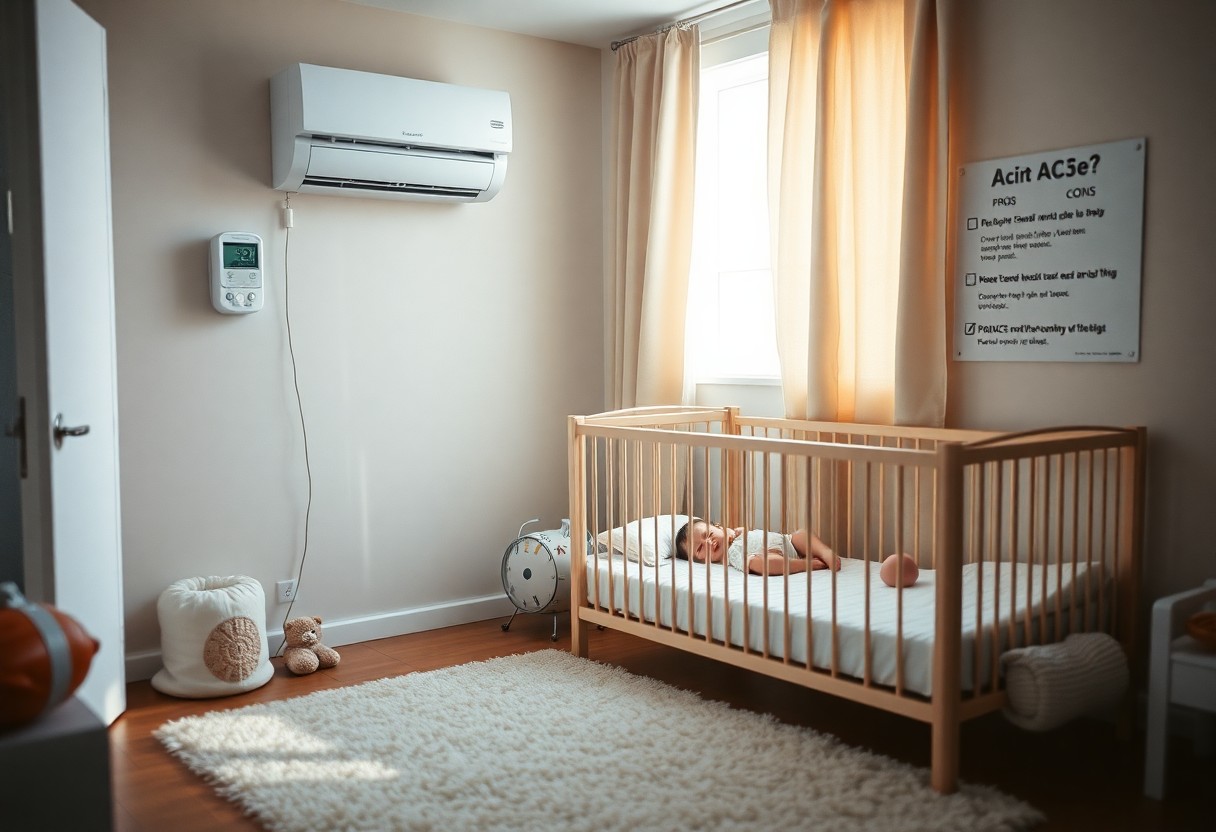
Pros and Cons of AC for Baby's Sleep
| Pros | Cons |
|---|---|
| Provides consistent temperature control | Can cause dryness in the air |
| Reduces noise from outside | Possible over-reliance on AC |
| Creates a comfortable sleep environment | May lead to colds or respiratory issues |
| Improves air circulation | Potential for allergies from dust and mold |
| Can help with heat-related discomfort | Higher energy costs during usage |
Benefits of Using AC
Using air conditioning can significantly enhance your baby's sleep quality by maintaining a stable, cool temperature, important for restful slumber. A comfortable environment helps prevent overheating, which can lead to restless nights. Fewer disturbances from outside noises create a peaceful atmosphere, making it easier for your baby to fall and stay asleep. Moreover, regulating humidity levels not only boosts comfort but also reduces the risk of heat-related issues.
Potential Drawbacks to Consider
Despite its advantages, air conditioning comes with some potential drawbacks that could impact your baby's health and comfort. Dry air can lead to skin irritation and respiratory problems, so monitoring humidity is important. Additionally, over-dependence on AC may make it challenging for your baby to adjust to natural temperatures, while constant airflow could stir up dust and allergens that lead to sneezing or congestion.
In particular, the dryness caused by air conditioning is worth noting. Infants have sensitive skin and mucous membranes, and exposure to dry air can result in dryness, causing discomfort or irritation. It's beneficial to use a humidifier alongside your AC to counteract this effect, especially during prolonged use. Regular maintenance of your AC unit is also vital to ensure it doesn't become a source of airborne allergens, protecting your baby's delicate respiratory system.
Summing up
Ultimately, your AC settings play a significant role in your baby's sleep quality in Brisbane's climate. By maintaining a comfortable temperature and ensuring proper airflow, you can create an ideal sleep environment for your little one. Adjusting the thermostat to a cooler setting during hot nights can prevent overheating, while using a fan can help circulate air. Additionally, keeping the room dark and minimizing noise can further enhance sleep. By being mindful of these adjustments, you promote healthier sleep habits and ensure a more restful night for both you and your baby.
FAQ
Q: What is the ideal temperature for my baby's sleep with the AC on?
A: The ideal temperature for a baby's sleep is typically between 22°C to 24°C. This range helps to ensure your baby is comfortable and reduces the risk of overheating during sleep.
Q: How can I properly set my AC to maintain comfortable humidity levels for my baby?
A: Aim for a humidity level between 40% to 60%. You can use a dehumidifier in conjunction with your AC or set the AC to the 'dry' mode, if available, to help control humidity levels.
Q: Does air circulation from the AC affect my baby's sleep quality?
A: Yes, good air circulation can help maintain an even temperature throughout the room. Ensure the AC is not directly blowing air onto the crib while still providing adequate cooling.
Q: How often should I clean or maintain my AC to ensure it's safe for my baby?
A: Regular maintenance is important. Clean or replace filters every 1-3 months and schedule professional servicing at least once a year to keep the air quality healthy for your baby.
Q: Can using the AC at night disrupt my baby's sleep cycle?
A: If the AC is too loud or the temperature fluctuates significantly, it may disrupt sleep. Consider using a white noise machine to mask any noise and maintain a steady temperature.