You may be considering the best option for your home's heating and cooling needs, and the choice between Mitsubishi Heavy and Mitsubishi Electric split systems can be pivotal. Both brands offer excellent performance and reliability, but they cater to different preferences and requirements. In this post, we will explore the key differences in features, efficiency, and installation between Mitsubishi Heavy and Mitsubishi Electric, helping you make an informed decision for your split system solutions.
Key Takeaways:
- Mitsubishi Heavy offers larger capacity models suitable for commercial applications.
- Mitsubishi Electric is known for energy efficiency and advanced technology features in residential systems.
- Mitsubishi Heavy units are typically more robust and may perform better in extreme weather conditions.
- Mitsubishi Electric provides a broader range of smart home integration options.
- Initial costs may vary, with Mitsubishi Electric often priced higher due to its advanced technology and features.
Overview of Mitsubishi Heavy and Mitsubishi Electric
Both Mitsubishi Heavy and Mitsubishi Electric are prominent names in the HVAC industry, each bringing distinct strengths to the table. While Mitsubishi Heavy focuses on robust industrial and commercial applications, Mitsubishi Electric excels in advanced residential solutions and innovative technology integration. Understanding their individual philosophies can help you determine which brand best aligns with your specific needs.
Company Background
Mitsubishi Heavy Industries, established in 1884, is a leader in heavy machinery and equipment, significantly contributing to infrastructure and industrial sectors. In contrast, Mitsubishi Electric, founded in 1921, prioritizes consumer electronics and energy-efficient technologies, aiming to enhance everyday living through innovation.
Product Lineup
Your choices within the product lineups of Mitsubishi Heavy and Mitsubishi Electric vary significantly. Mitsubishi Heavy offers high-capacity air conditioning systems suitable for larger commercial buildings, while Mitsubishi Electric provides a range of energy-efficient split systems tailored for residential applications, making it popular among homeowners.
Mitsubishi Heavy's offerings include the City Multi series, designed for expansive spaces with variable refrigerant flow technology that ensures optimal energy management. On the other hand, Mitsubishi Electric features the M-Series for residential environments, emphasizing quiet operation and smart controls. Their extensive product catalogs allow you to choose according to your space requirements and efficiency preferences, ensuring you find the ideal solution for your needs.
Performance Analysis
When evaluating Mitsubishi Heavy and Mitsubishi Electric, performance is a key factor. Both brands showcase impressive technology and engineering, but their distinct approaches impact reliability and efficiency. Analyzing temperature consistency, noise levels, and adaptability to various environments will provide valuable insights into which brand best suits your specific needs.
Energy Efficiency
Your energy bills directly benefit from choosing an energy-efficient system. Mitsubishi Electric is renowned for its advanced inverter technology, achieving seasonal efficiency ratings (SEER) as high as 26. Conversely, Mitsubishi Heavy often focuses on robust, energy-efficient models suited for extreme conditions, typically around SEER ratings of 20. Understanding these differences can help minimize your energy consumption.
Cooling and Heating Capacity
The cooling and heating capacity of your split system is a vital consideration. Mitsubishi Heavy generally offers higher output, making it ideal for larger spaces or challenging climates. In contrast, Mitsubishi Electric provides versatile options that suit various room sizes without compromising comfort. Assessing your specific requirements will ensure optimal performance year-round.
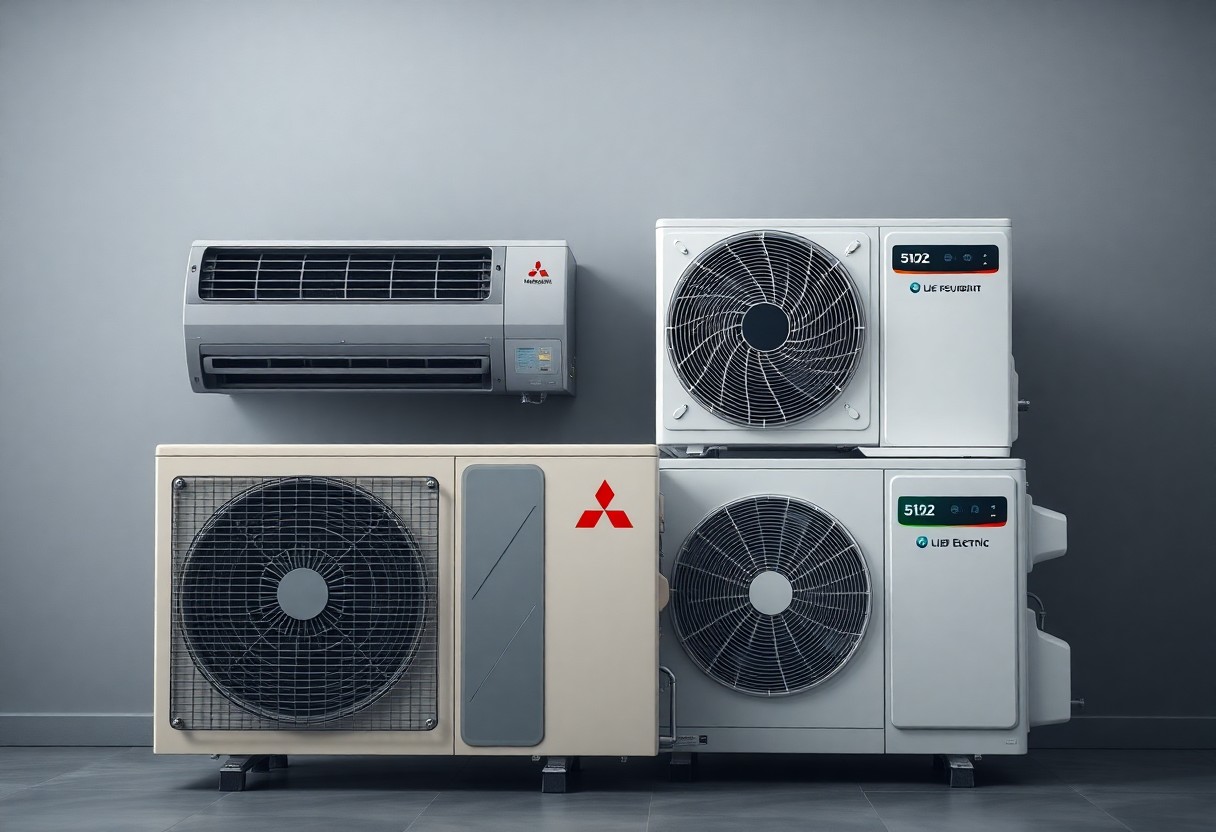
Features Comparison
| Mitsubishi Heavy | Mitsubishi Electric |
|---|---|
| High-efficiency compressor systems | Advanced inverter technology for energy savings |
| Robust build quality for durability | Sleek design with a modern aesthetic |
| Extensive warranty coverage | Cutting-edge smart home integration |
Technology and Innovation
Mitsubishi Heavy emphasizes reliability through its durable engineering and high-efficiency units, focusing on traditional HVAC technologies that have stood the test of time. In contrast, Mitsubishi Electric integrates smart technology, allowing for real-time monitoring and control, ensuring your system operates at peak efficiency and provides seamless user experiences.
User-Friendly Controls
User-friendly controls are pivotal when selecting between Mitsubishi Heavy and Mitsubishi Electric. Mitsubishi Electric offers intuitive smartphone applications and user interfaces that simplify system adjustments, while Mitsubishi Heavy's remote controls prioritize straightforward navigation, making it easier for you to manage your indoor climate effectively.
You'll find that Mitsubishi Electric's controls often include features like geofencing and smart scheduling, enabling your air conditioning to adjust based on your location and habits. In contrast, Mitsubishi Heavy focuses on providing crucial control features without overwhelming complexity. Both styles cater to different preferences, allowing you to choose based on whether you favor high-tech features or simplicity in operation.
Installation and Maintenance
The installation and maintenance of your split system play a vital role in its longevity and efficiency. Proper installation ensures that your system operates at peak performance, reducing energy bills and preventing future issues. Routine maintenance keeps your unit running smoothly, allowing you to enjoy optimal comfort with minimal interruption.
Installation Process
Your installation process begins with selecting the right system based on your needs. Professionals will assess your space and ensure proper placement for optimal airflow. They'll also handle refrigerant charging and electrical connections, ensuring everything meets local regulations. This meticulous approach lays the foundation for a reliable and efficient split system.
Maintenance Requirements
Cost Considerations
When identifying between Mitsubishi Heavy and Mitsubishi Electric for split systems, cost plays a significant role in your decision-making process. Initial pricing and long-term value are two key factors that can impact your overall investment.
Initial Pricing
Your upfront costs for Mitsubishi Heavy units typically fall within a lower range compared to Mitsubishi Electric systems. For instance, you might find that a standard model from Mitsubishi Heavy is priced around $3,000, while similar models from Mitsubishi Electric can start at $3,500. This price difference can be significant, especially for budget-conscious consumers.
Long-Term Value
Although initial pricing is important, consider the long-term value each brand offers. Mitsubishi Electric often highlights its systems' higher energy efficiency ratings, which can lead to substantial savings on your utility bills over time. In contrast, Mitsubishi Heavy's durability and lower maintenance costs can also result in a favorable long-term investment.
For example, a Mitsubishi Electric unit with an energy efficiency rating of SEER 22 may save you an estimated $400 annually on energy costs compared to a SEER 15 Mitsubishi Heavy system. Over its 12-year lifespan, that savings could reach $4,800, significantly offsetting the initial price difference. Additionally, the durability of both brands means fewer repairs and replacements, making long-term maintenance costs another factor to weigh in your decision. Assessing these aspects helps you make an informed choice that aligns with your budget and needs.
Consumer Reviews and Satisfaction
When evaluating Mitsubishi Heavy versus Mitsubishi Electric, consumer reviews reveal significant insights into satisfaction levels. Users consistently praise the reliability and performance of both brands, noting that they appreciate energy efficiency and low noise levels. However, some reviews highlight Mitsubishi Heavy's superior cooling capabilities in extreme temperatures, while others favor Mitsubishi Electric for its advanced technological features. Overall, feedback indicates a strong likelihood of repeat purchases from both companies.
Customer Experiences
Your personal experiences with customer service matter, and both Mitsubishi Heavy and Mitsubishi Electric frequently receive positive remarks in this area. Many customers report that installation processes are straightforward and that their systems function effectively over time. With a focus on durability, users often mention longevity, comparing the operational lifespan of their units favorably against competitors.
Warranty and Support
You'll find that both Mitsubishi Heavy and Mitsubishi Electric offer competitive warranties. Typically, you can expect a limited warranty ranging from 5 to 10 years for parts, demonstrating confidence in their product reliability. Their support services are often noted as accessible, providing assistance through various channels, including phone and online resources.
In greater detail, Mitsubishi Heavy provides a 7-year warranty on parts, which enhances your peace of mind when investing in a system. On the other hand, Mitsubishi Electric offers different warranty lengths depending on the model, with some high-end units featuring up to 10 years coverage on parts. Both brands also emphasize responsive customer support, featuring dedicated teams for troubleshooting and inquiries, ensuring that any post-installation issues are swiftly addressed. This commitment to support enhances overall consumer satisfaction, leading to loyal customers and referrals.
Final Words
The choice between Mitsubishi Heavy and Mitsubishi Electric for split systems ultimately depends on your specific needs and preferences. While Mitsubishi Heavy often excels in larger commercial applications with robust performance, Mitsubishi Electric caters more to residential customers with a focus on energy efficiency and advanced features. Evaluate factors such as installation requirements, energy ratings, and warranty support to determine which brand aligns best with your climate control goals and budget. Your informed decision will lead to a satisfactory long-term investment in your comfort and efficiency.
FAQ
Q: What are the main differences between Mitsubishi Heavy and Mitsubishi Electric split systems?
A: Mitsubishi Heavy generally focuses on commercial applications and offers robust systems designed for larger spaces, while Mitsubishi Electric primarily targets residential markets with a variety of options suitable for home use.
Q: Which brand offers a wider range of split system models?
A: Mitsubishi Electric offers a broader range of split system models, including more variations in design, efficiency ratings, and capabilities tailored to residential needs.
Q: How do the energy efficiency ratings compare between Mitsubishi Heavy and Mitsubishi Electric systems?
A: Both brands provide high energy efficiency ratings, but Mitsubishi Electric tends to have more models that achieve higher efficiency ratings specifically designed for residential settings.
Q: Which brand is better for quieter operation in split systems?
A: Mitsubishi Electric is often recognized for its quieter operation in split systems, making it a popular choice for residential installations where noise is a concern.
Q: What kind of warranty do Mitsubishi Heavy and Mitsubishi Electric offer on their split systems?
A: Mitsubishi Electric typically offers a more comprehensive warranty for residential units, whereas Mitsubishi Heavy may provide warranties that vary based on commercial applications and system types.